
If you're flying drones or into any RC hobby, getting LiPo battery safety right is something you absolutely cannot afford to get wrong. These batteries are performance beasts, but they pack a serious punch with some pretty volatile chemistry. One mistake can lead to a spectacular failure, and I'm talking about a fire that's incredibly intense.
So, let's be clear: mastering how to handle, charge, and store these batteries isn't just a "best practice"—it's the only way to protect yourself, your gear, and your home.
Why LiPo Safety Is Non-Negotiable
After you’ve done a hundred flights without a problem, it’s easy to get a bit relaxed about your LiPos. They just become another piece of kit you toss in your bag. The safety warnings start to fade into the background. But that’s a dangerous trap to fall into, because it ignores the raw chemical energy crammed inside every single battery. The very thing that gives your drone its power and long flight times is what makes them a hazard if you don't treat them with respect.
A LiPo isn't like a simple AA battery. It's more like a carefully controlled chemical reaction in a pouch. When everything is balanced, it’s all good. But things like overcharging, puncturing a battery in a crash, or even storing it incorrectly can throw that balance out of whack. This can trigger a nasty chain reaction called thermal runaway. We're not talking about a little spark here; this is a full-on, self-sustaining chemical fire that burns incredibly hot and is a nightmare to put out.
The Real-World Consequences
A LiPo fire isn't just going to wreck your drone. It can easily ignite anything flammable nearby, turning a simple mistake into a major fire in your workshop, car, or house. This isn't just scaremongering; these incidents are becoming a real problem worldwide.
In Australia, for instance, lithium-ion battery fires are a growing concern. The Australian Competition and Consumer Commission (ACCC) has fielded 231 product safety reports and seen around 89,000 product recalls in the last five years due to these risks. You can read more on the ACCC's warnings at accc.gov.au.
To really drive home why this is so critical, it’s worth taking the time to learn about the science behind it. A great place to start is understanding why Li-Ion batteries explode and how to be safe.
Following strict safety procedures is standard practice in the world of professional drone operations for this very reason. It’s why commercial drone systems go through such intense compliance testing. For a glimpse into how seriously this is taken at the professional level, check out the story behind Innoflight International's Transport Canada compliance.
The goal here isn't to make you afraid of your batteries. It's to build a healthy respect for the power you're holding in your hands.
Mastering Your LiPo Charging Routine
Charging is, without a doubt, the most dangerous part of handling LiPo batteries. This is the moment you're actively pumping energy into a delicate chemical system. One small mistake here can have big, fiery consequences. Getting into a safe, consistent charging routine isn't just a suggestion—it's a core discipline for any serious drone pilot.
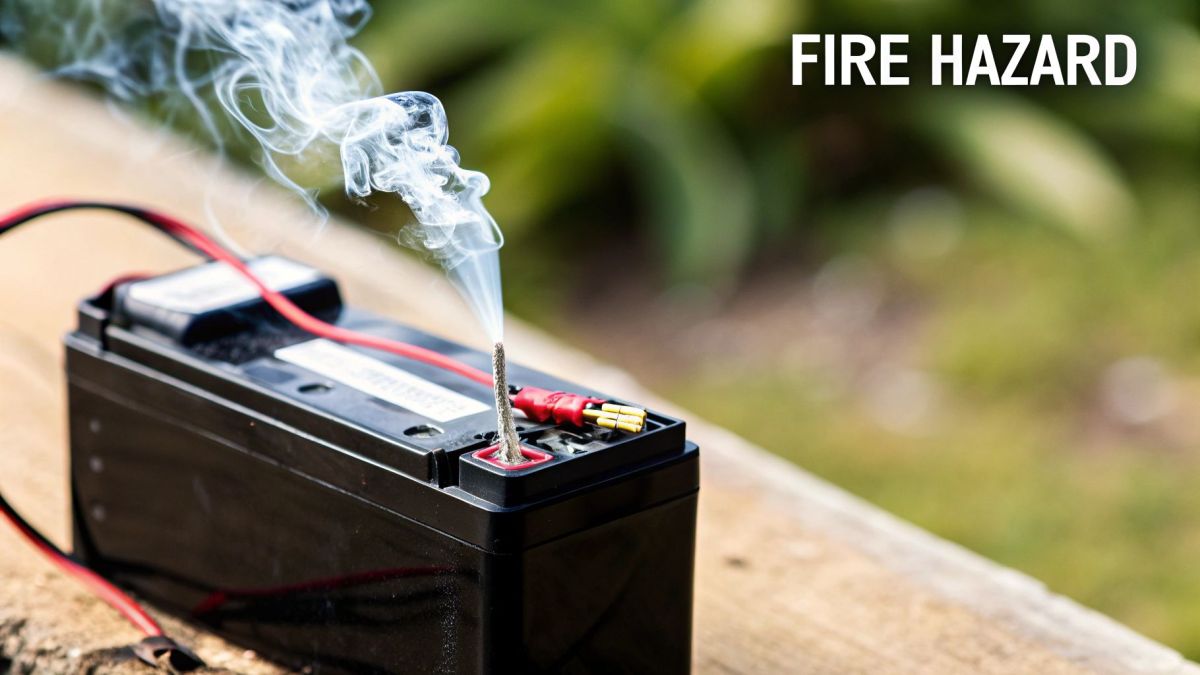
Your first and most important piece of gear is a high-quality balance charger. I can't stress this enough. Those cheap, basic chargers that don't balance the cells are just asking for trouble. A good balance charger individually monitors and adjusts the voltage of each cell inside the pack, making sure they all hit their peak of 4.2V together. This prevents one cell from overcharging while another is still low, which is a classic recipe for battery failure.
Rushing the setup is a mistake I see people make far too often. Before you even think about plugging that battery in, you need to double-check your charger settings. Every single time. This tiny habit can prevent a total disaster.
Your Pre-Charge Checklist
Always take a beat to run through these three settings before you hit the 'start' button. Honestly, this simple check prevents the vast majority of charging fires.
- Battery Chemistry: Make sure the charger is set to "LiPo." Accidentally charging it on a NiMH or NiCd setting is a surefire way to cause thermal runaway.
- Cell Count (Voltage): Match the charger's cell count (like 3S, 4S, or 6S) to what's printed on the battery. A 3S battery needs the 3S (11.1V) setting, not the 4S (14.8V) setting. No exceptions.
- Charge Rate (Amperage): The golden rule is to charge at a 1C rate. What does that mean? For a 5000mAh battery, 1C is 5.0 amps. For a 2200mAh battery, it's 2.2 amps. Simple.
Getting this wrong is practically a guarantee of a fire. Imagine you accidentally set the charger to 6S for a 3S battery—you'd be forcing almost double the intended voltage into the pack. The result won't be pretty.
The cardinal rule of LiPo charging is this: Never, ever walk away from a battery while it's charging. You have to be in the room and paying attention, ready to pull the plug at the first sign of trouble like puffing, a hissing sound, or the pack getting unusually warm.
Creating a Safe Charging Station
Where you charge is just as critical as how you charge. Never charge on anything that can catch fire. That means no wooden workbenches, no carpeted floors, and definitely not on top of your drone case.
The best approach is to create layers of safety with a fire-resistant surface and some form of containment.
- Charging Surface: A concrete garage floor is perfect. Ceramic tiles or even a large metal baking tray also work great as a fireproof base.
- Containment: Always, and I mean always, put the battery inside a LiPo-safe charging bag or a metal ammo can. If you use an ammo can, make sure you've removed the rubber seal from the lid so pressure can escape. These are designed to contain the initial flare-up, buying you precious time to react.
Think of it as your safety net. If a battery does go up in flames, the bag or can will help control the fire and stop it from spreading through your house or workshop. It’s a small investment for some serious peace of mind. Getting these habits right is a huge part of extending your drone battery life and keeping yourself and your property safe.
To make things even easier, I've put together a quick checklist you can mentally run through every time you charge.
Your LiPo Charging Safety Checklist
This table is your quick reference guide. Run through these points before, during, and after every charge to keep the risks as low as possible.
| Check Point | Action Required | Why It Matters |
|---|---|---|
| Inspect the Battery | Before plugging in, check for any puffing, dents, or damage to the wires or connectors. | Charging a damaged battery is extremely dangerous and can lead to immediate failure. |
| Verify Charger Settings | Confirm the charger is set to LiPo, with the correct cell count and a 1C charge rate. | Incorrect settings are the leading cause of charging fires. |
| Use a LiPo Bag | Place the battery inside a LiPo-safe bag or other fireproof container before charging. | This contains the initial fire and smoke if the battery fails, preventing spread. |
| Charge on a Safe Surface | Never charge on wood, carpet, or other flammable materials. Use concrete, tile, or metal. | Prevents a small battery fire from turning into a major house fire. |
| Stay Present | Never leave a charging LiPo battery unattended. Stay within sight and earshot. | You need to be able to react instantly if you see or hear signs of trouble. |
| Monitor the Charge | Periodically check for signs of overheating or puffing during the charging cycle. | Catching a problem early allows you to safely stop the charge and prevent a fire. |
| Unplug Promptly | Disconnect the battery from the charger as soon as the charge cycle is complete. | Leaving a fully charged battery on the charger adds unnecessary risk. |
Making these checks a non-negotiable part of your routine is the best way to ensure every charge is a safe one. It quickly becomes second nature.
How to Inspect and Handle Your Batteries
Your LiPo batteries will often give you pretty clear warning signs before they fail, but you have to know what to look for. Treating every time you touch a battery as a deliberate safety check is a habit that separates experienced pilots from those who risk disaster. This process should start the moment a flight ends and be repeated right before the next one begins.

This isn’t just about spotting obvious damage from a crash. It’s about catching the subtle signs of internal wear and tear that signal a battery is becoming a fire hazard. After every single flight, once the battery has had a chance to cool down, give it a thorough once-over.
This simple physical check is your first line of defence in maintaining lipo batteries safety.
The Physical Inspection Checklist
Make it a non-negotiable habit to check for these red flags. Finding even one of these means the battery must be immediately and permanently retired from flying duties.
- Puffing or Swelling: This is the classic, most notorious sign of a failing LiPo. If the battery isn't perfectly flat and feels even a little bit soft or puffy, gas has built up inside. This is a deal-breaker; the battery is compromised and dangerous.
- Dented Corners or Edges: A hard landing or even just dropping the pack can easily crush the corners. This kind of impact can damage the delicate layers inside, creating a potential short circuit just waiting to happen.
- Punctures or Deep Scratches: Any breach of the outer foil wrapper is extremely serious. Never, ever attempt to "fix" a torn wrapper with tape if the cell underneath is exposed or damaged.
- Damaged Wires or Connectors: Check for frayed insulation on the main power and balance leads. A loose or damaged connector is another easy way to cause a short circuit.
If you find a damaged battery, what you do next is critical. Carefully move it to a fireproof container—think a metal ammo can or a bucket of sand—and place it outside, well away from anything flammable. It then needs to be safely discharged before you can dispose of it.
Safe Transport Practices
Safe handling doesn't stop at your workshop or charging station. How you transport your batteries is just as important for safety. Never just toss them loose into a gear bag where they can be punctured by props or short-circuited by tools.
The rule of thumb for transport is simple: every battery should be in its own protective container. A dedicated LiPo-safe bag for each battery is the gold standard for preventing accidental shorts and containing a potential fire.
When flying commercially within Australia, the regulations are strict and you need to follow them. Batteries must be in your carry-on luggage, not checked in. Each one needs to be individually protected, either in its original retail packaging, a proper LiPo bag, or by taping over the terminals. There are also limits on the Watt-hour (Wh) rating, so always check with your specific airline before you head to the airport.
The risks here aren't just theoretical. Data from Fire and Rescue NSW shows a shocking increase in lithium-ion battery incidents, jumping 66% from 171 in 2022 to 285 in 2023. You can see the full breakdown on the FRNSW website.
Choosing the right Li-Po battery for your drone is the first step, but it's the proper, consistent handling that truly ensures your long-term safety.
Smart Storage: Your Best Defence Off the Field
Where you keep your LiPos is just as important as how you charge them. A battery isn't just 'off' when it's unplugged; it's a little bundle of chemical energy waiting for its next job. Storing it properly is all about keeping that energy stable and safe for the long haul. It protects your gear, and more importantly, it protects your home.
One of the worst habits I see is pilots leaving their batteries fully charged after a day of flying. When a LiPo cell is sitting at 4.2V, it's at its most stressed and volatile state. Leave it like that for a few days, and you're not just damaging the battery's chemistry and shortening its life—you're significantly upping the fire risk.
On the flip side, storing a battery completely empty can also kill it. You've got to find that happy medium.
The Magic of Storage Charge
The golden rule for keeping LiPos happy long-term is putting them to a storage charge. This simply means getting each cell to around 3.8V to 3.85V. At this voltage, the internal chemistry is relaxed and stable, making a spontaneous failure far less likely.

Thankfully, this is easy. Almost every modern balance charger has a "Storage" mode. It's a one-button job: the charger will automatically bring a full pack down to the right voltage or charge a used pack up to it. Making this a non-negotiable final step after every flight session is probably the best habit you can get into.
I like to think of storage voltage as the battery’s hibernation mode. It’s calm, stable, and settled in for a long rest. A fully charged pack is more like a sprinter coiled on the starting blocks—full of tense energy and not meant to stay that way.
Where and How to Store Them
Once your batteries are at storage voltage, the next question is where to put them. The ideal spot is cool, dry, and nowhere near flammable materials. A hot car, a sun-drenched shed, or a damp garage are all terrible ideas. Heat and humidity are your enemies here, as they can speed up chemical breakdown and increase internal pressure.
For the container itself, you’ve got a few solid options that add a crucial layer of fire protection:
- LiPo-Safe Bags: These fire-resistant fibreglass bags are a cheap and effective first line of defence. They are designed to contain the initial flames and intense heat if a battery lets go. I use them for both storage and transport.
- Metal Ammo Cans: A really popular solution for storing a larger collection of batteries. The most important tip here is to rip out the rubber seal from the lid. This allows pressure to vent if a battery fails, preventing the can from turning into a sealed bomb.
- Dedicated "Bat-Safes": These are purpose-built steel boxes, often with filtered vents, designed from the ground up to safely contain a LiPo fire. They're the premium option for peace of mind.
These aren't just hobbyist tips; they mirror much broader safety standards. Professional workplace guidelines emphasise storing lithium-ion batteries in cool, dry areas and performing regular checks to manage fire risks. As these batteries become more common across Australia's tech sector, these practices are becoming standard procedure. You can get more professional insights on this from Enviro Essentials.
By pairing the right storage voltage with a proper fireproof container in a stable environment, you build a solid system that keeps your LiPo batteries safe and sound when they’re not in the air.
Disposing of Old LiPo Batteries Safely
Sooner or later, every LiPo battery reaches the end of its useful life. After a certain number of cycles, performance drops off, and it can start to become a safety risk. A huge part of lipo batteries safety is knowing how to retire these batteries responsibly. Chucking them in the bin is an absolute no-go—it's a massive fire hazard for waste collection services and landfills.
The first, most important thing you must do is safely and completely discharge the battery down to zero volts. Even a weak, tired LiPo holds enough energy to be dangerous if it gets punctured or shorted out. Discharging it properly makes it chemically inert and safe to handle.
Safely Discharging Your LiPo
You've got a few solid options for getting a LiPo down to zero volts. A purpose-built battery discharger is the most controlled way to do it, but a simple homemade rig can work just as well.
- Dedicated Discharger: Many high-end chargers come with a "destroy" or deep discharge function that automates the whole process for you.
- Light Bulb Discharger: This is a classic DIY method. Just solder a low-wattage 12V automotive light bulb to a spare battery connector. Plug the battery in and leave it somewhere safe—like in a bucket of sand outdoors—until the bulb completely goes out. This can take a day or even longer, so be patient.
- Saltwater Bath: This should really be your last resort. You can submerge the battery in a plastic tub of saltwater (about half a cup of salt for every 4 litres of water). Leave it for at least a week, or until a multimeter shows zero volts. Just be aware that this corrodes the connectors and releases a bit of chlorine gas, so it absolutely must be done outside in a well-ventilated spot.
Before you get to the disposal stage, it’s worth thinking about the logistics. If you ever need to ship batteries for recycling, for instance, you have to be across the very strict hazmat shipping requirements to stay compliant.
This infographic gives a good overview of the maintenance routine that helps you spot when a battery is getting close to retirement.
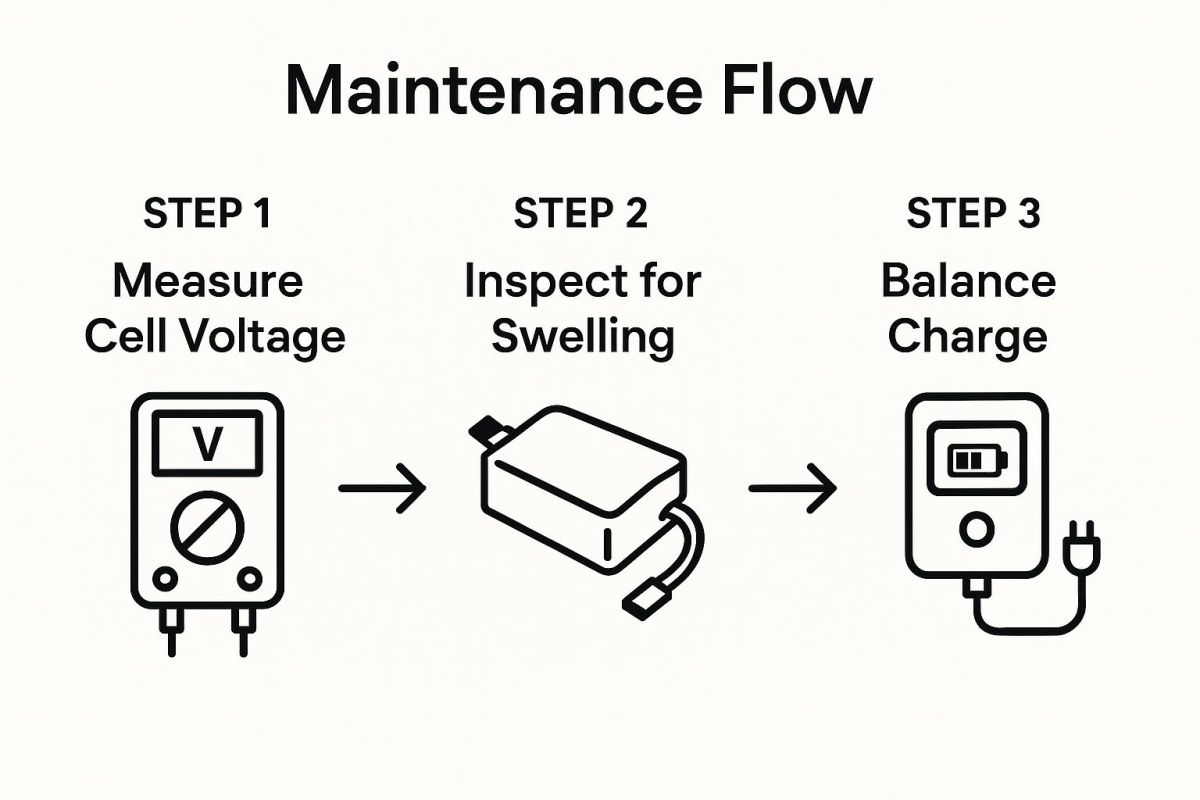
Keeping a close eye on voltage, regularly checking for physical damage, and always balance charging are the habits that keep your batteries healthy and let you know when it’s time to say goodbye.
Finding a Recycling Location in Australia
Once you’ve confirmed the LiPo is totally flat (double-check it with a multimeter!), it's finally ready for recycling. Please, never put them in your household recycling or general waste bin.
In Australia, you can find your nearest battery drop-off point using services like Planet Ark's Recycling Near You or B-cycle. Many local councils, as well as retailers like Officeworks and Battery World, offer free recycling for LiPo batteries.
As a final precaution, take a second to tape over the battery leads before you drop it off. It’s a small step, but it adds one last layer of protection against an accidental short circuit, ensuring you’ve handled the battery safely from its first flight to its final farewell.
Common Questions on LiPo Battery Safety
Even when you follow all the rules, some situations just make you stop and think. Let's run through a few of the most common questions I hear from drone pilots about LiPo safety and get you some clear, no-nonsense answers.
What Should I Do If My LiPo Puffs Up?
A puffy LiPo is a serious warning sign. When a battery swells up like that, it's because a chemical reaction inside is creating gas. This means the battery is unstable and could burst or catch fire at any moment.
If you spot a puffed pack, what you do next is critical. Immediately and very carefully, get that battery outside to a fireproof spot. Think of a concrete driveway or a bucket of sand, well away from anything that could catch fire. Don't even think about charging it, using it, or trying to puncture it.
Once it's safely isolated and has had plenty of time to cool and stabilise, it's time to dispose of it properly. You'll need to fully discharge it down to zero volts before taking it to a proper battery recycling centre.
Can I Leave LiPos Fully Charged Overnight?
In a word: no. Leaving a LiPo fully charged is one of the riskiest and most damaging things you can do. At full charge, the battery's internal chemistry is under maximum stress, making it far more volatile. This not only dramatically increases the chance of a spontaneous fire but also hammers the battery's overall health and lifespan.
Get into this habit: only charge your batteries within a few hours of flying. If your plans change, make the time to discharge them back to a storage voltage, which is about 3.8V per cell.
Is It Okay to Use a Slightly Damaged LiPo?
Never. I can't stress this enough. A LiPo with any physical damage—no matter how minor it looks—is a write-off. A small dent, a deep scratch, or a tear in the silver casing can easily damage the delicate internal layers, creating a perfect recipe for a short circuit.
That short circuit can lead to a sudden, violent fire or even an explosion. This can happen while charging, in the air, or even when the battery is just sitting on a shelf. The few quid you might save trying to squeeze one last flight out of a damaged pack isn't worth risking your drone, your home, or yourself.
Any battery showing physical damage is a hazard. Retire it from service straight away.
At Innoflight International, we believe that safety is the foundation of every successful drone operation. From advanced UAS platforms to expert support, we provide the tools and knowledge you need to fly with confidence. Explore our drone solutions to see how we can support your mission.