
Patriot
Built to stay up. With LiDAR aboard.
68 minutes in hover with a 1.75 kg payload and 40 Ah battery, to landing voltage. Payload weight equivalent to a LiDAR USA scanning system. 52 Ah battery now available.
1.75 kg payload · 40 Ah battery · to landing voltage.
Payload weight equivalent to a LiDAR USA scanning system.
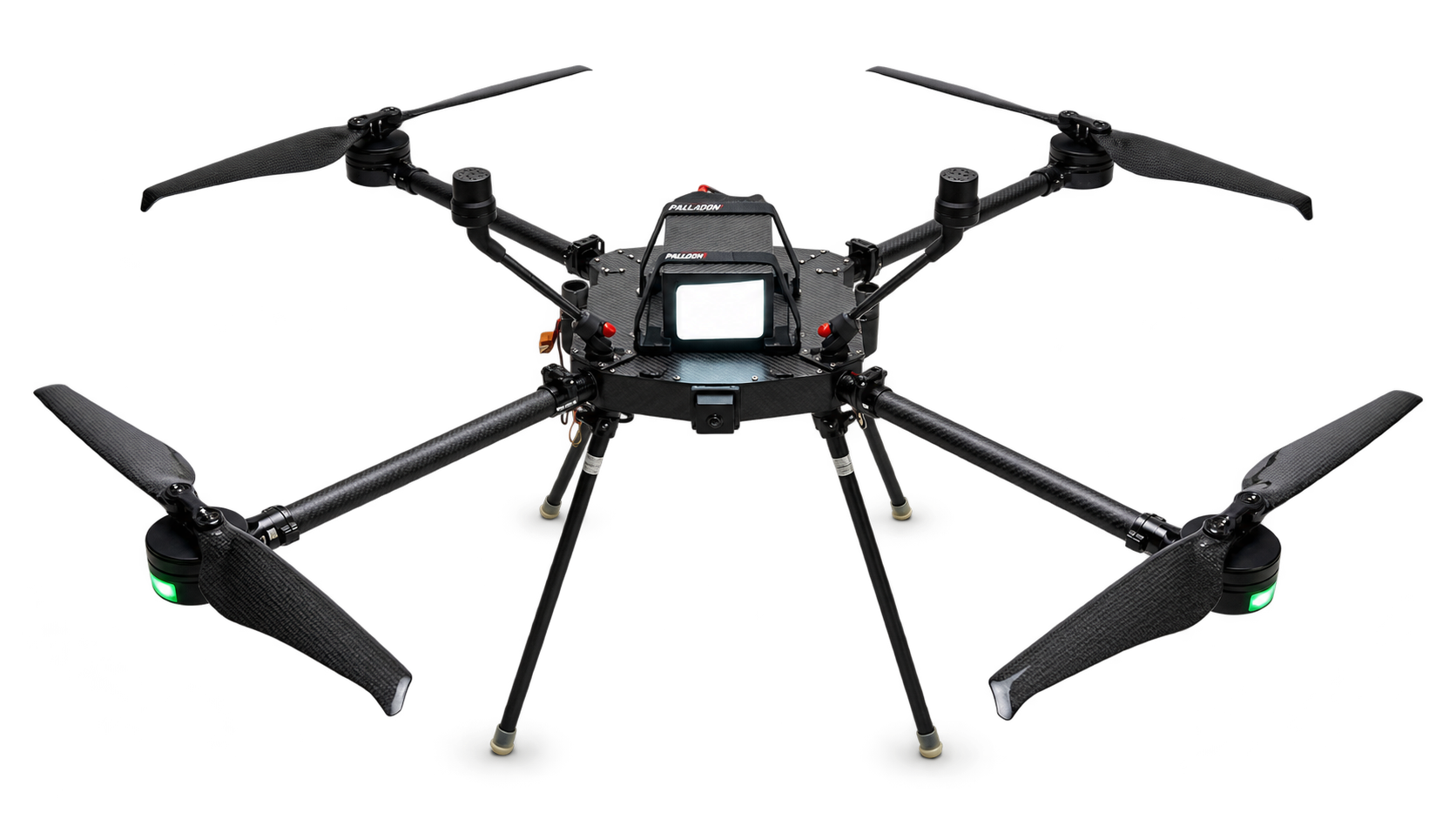
Start with your mission.
Choose your aircraft, payload and battery. See a modelled flight-time estimate and build a configuration brief.
Patriot configuration
How this estimate is calculated
Based on Evolution Flight’s flight-performance model, using your selected aircraft, battery and payload. The calculator uses the efficient-cruise profile to estimate available mission minutes.
The calculator subtracts a fixed 10-minute battery reserve from the modelled flight time before displaying your mission minutes. This reserve model does not predict a landing voltage. Cruise efficiency is a modelling assumption, not a measured mission result.
Weight includes airframe, battery and entered payload. Powered sensors, wind, air density, battery health and flight manoeuvres may reduce endurance. Low-thrust estimates extrapolate below the bench measurements. Confirm your complete mission configuration with the team.
Modelled estimates, not guaranteed flight times. Your choices carry into the enquiry.
68 minutes.
Holding its position.
The Patriot achieved 68 minutes in hover carrying a 1.75 kg payload on a 40 Ah battery, reaching landing voltage. That payload weight is equivalent to a LiDAR USA scanning system.
Now available with 52 Ah.
The 52 Ah battery offers 30% more nominal capacity in amp-hours than the tested 40 Ah battery. Flight time with the 52 Ah configuration is yet to be validated.
Hover is only part of the story.
Forward flight at an efficient speed can use less power than hovering. The benefit depends on airspeed, aircraft configuration and conditions; Patriot mission endurance requires testing with your chosen setup.
Plan your endurance configuration1.75 kg payload · 40 Ah battery
Test endpoint: landing voltageManufacturer-reported result. Payload mass equivalent to a LiDAR USA scanning system; this is not a test claim for a named scanner or the aircraft’s maximum payload. The 52 Ah battery was not used in this test. More battery capacity does not translate directly into the same percentage increase in flight time.
Get a closer look.
Choose a view. Open a photo to see the aircraft and field setup in detail.
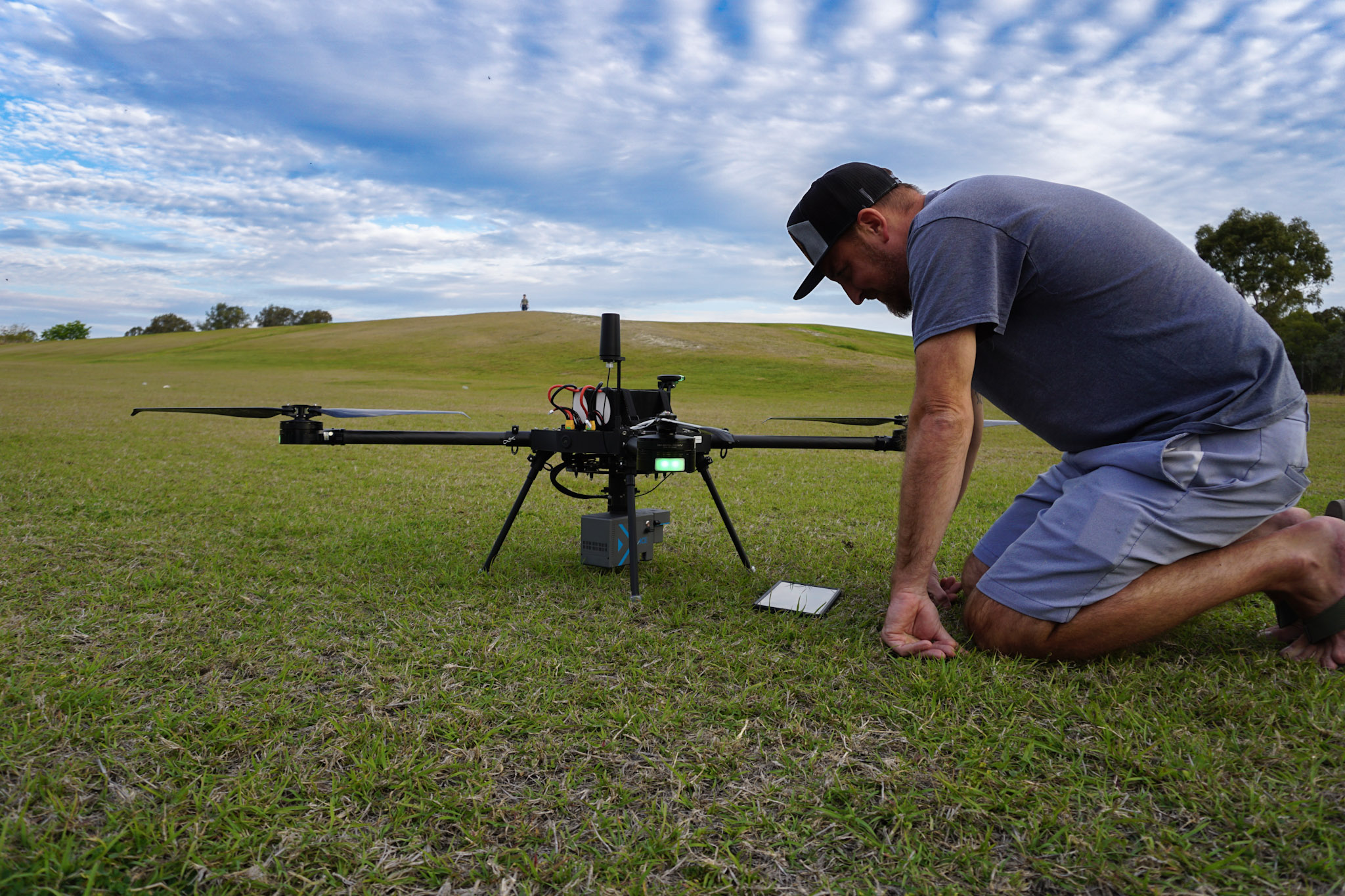 View full photo ⤢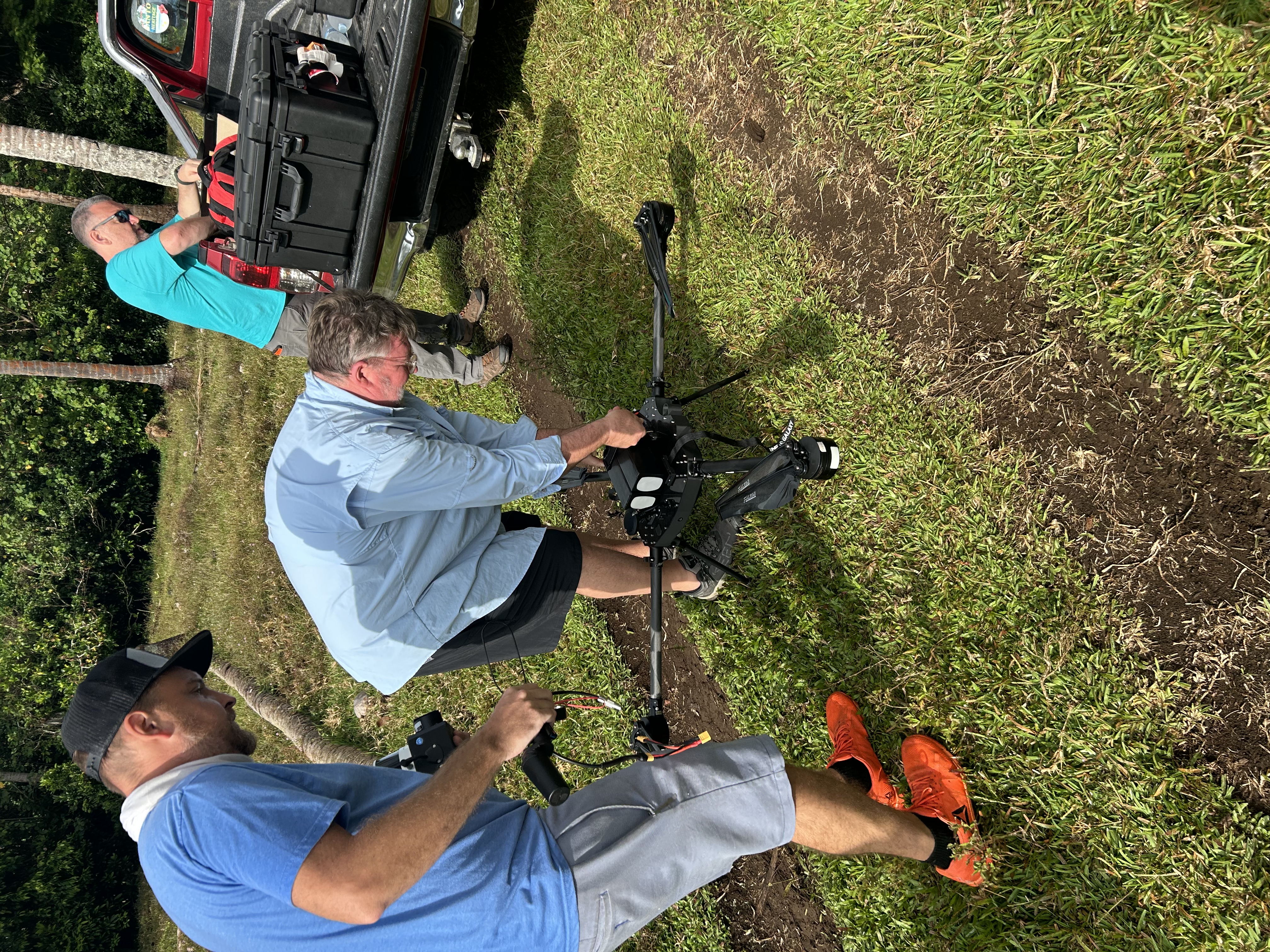
Built around
the way you work.
Aircraft, batteries and payloads come together in the field. Plan your Patriot configuration around your team, your equipment and your next mission.
Discuss your Patriot configuration ↗Capability that counts.
The Patriot combines modular arms and legs with configurable power outputs and a vibration-isolated payload mount. Build your configuration around the sensor, camera and working environment your operation needs.
Modular in the field
Interchangeable arms make it easier to replace damaged components and get back to work.
Secure control
Encrypted data links, permission-only hardware pairing, and locally retained flight data.
Autonomous missions
CubePilot flight control supports autonomous flight and repeatable mission planning.
Payload integration
A dampened quick-connect mount helps isolate vibration and makes payload changes simple.
More detail for your mission.
Explore the X4 configuration described by our US sales, integration and support partner. Confirm the equipment and performance included in your quotation.
A different payload configuration
The brochure advertises over 60 minutes with a 4 kg payload and capacity for loads up to 8 kg. The 4 kg figure describes a different configuration from the 1.75 kg hover test highlighted above. Neither flight-time figure applies to the maximum load.
Dual-GPS heading
Satellite-based heading avoids magnetic compass calibration. The brochure describes this as useful when operating around infrastructure.
Three FPV views
Forward, downward at 45° and straight-down views support navigation, inspection and positioning.
Controller choices
The brochure presents WAGAN and BLUE Herelink controllers. WAGAN lists an IP55 enclosure and up to five hours of operation; BLUE Herelink lists a 5.46-inch, 1,000-nit touchscreen.
The right payload changes everything.
Discuss a Patriot configuration around the sensor, mounting, power and data interfaces you need.
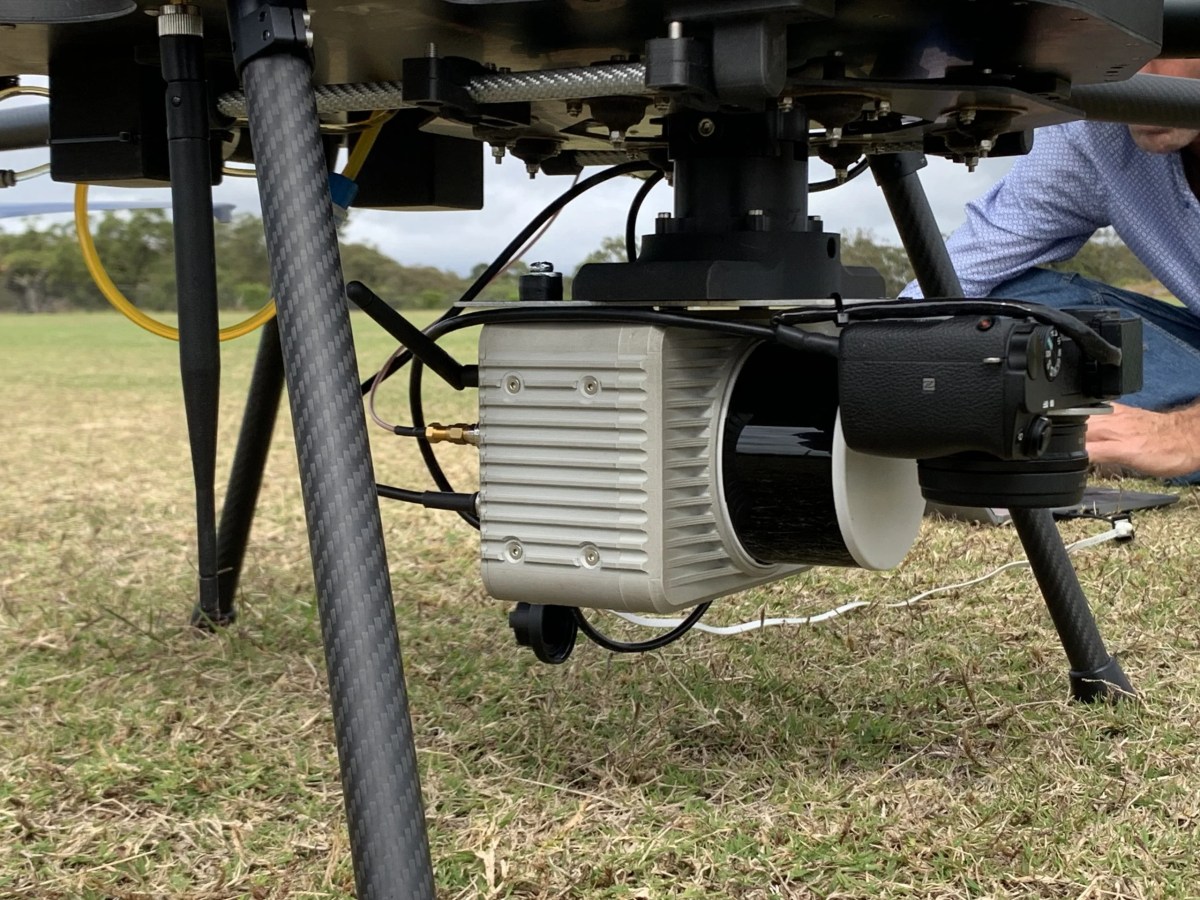
LiDAR systems
Explore sensors for aerial and ground-based mapping.
Camera & mapping workflows
Bring imaging, positioning and processing together.
Custom integration
Review mounting, power and data connections.
Payload compatibility is confirmed for each configuration. Archive imagery illustrates previous integration work.
Discuss your payloadPatriot specifications.
| Maximum payload | 8 kg |
|---|---|
| Maximum take-off weight | 21 kg |
| Measured hover endurance | 68 minutes in hover · 1.75 kg payload · 40 Ah battery · to landing voltage |
| Test payload | 1.75 kg — weight equivalent to a LiDAR USA scanning system |
| Test endpoint | Landing voltage |
| Maximum tested wind | 40 km/h (11 m/s) |
| Rated wind tolerance | 25.2 km/h (7 m/s), ground level, no payload |
| Maximum survey speed | 12 m/s |
| Maximum flight speed | 15 m/s |
| Operating temperature | −10°C to 40°C, no payload |
| Airframe without battery or payload | 9.21 kg |
| Battery used in hover test | 40 Ah · 4.7 kg |
| Battery now available | 52 Ah · 5.2 kg — measured endurance to be validated |
LiDAR USA configuration reference
LiDAR USA’s Patriot listing gives a 1.32 m motor-to-motor span, two 25,000 mAh HV 6S batteries, 5 V / 12 V payload power and S.Bus / serial communications.
The same listing states a 7.35 kg dry weight including the LiDAR dampening plate and quick-release mount, a 20 kg maximum take-off weight and 10–45 minutes of endurance. These references describe different configurations from the current hover test highlighted on this page. Evolution Flight reports 68 minutes in hover with a 1.75 kg payload and 40 Ah battery, to landing voltage. The payload weight is equivalent to a LiDAR USA scanning system. A 52 Ah battery is now available; its endurance is yet to be validated. The earlier Evolution Flight table listed 30–100 minutes. Request a configuration-specific specification before ordering.
Published figures vary with payload, batteries, accessories, environment and operating reserves. Endurance ranges do not represent flight time at maximum payload. Reference PDFs may cover earlier configurations. Confirm the current mission specification with our team.
Keep your operation moving.
Find documentation, discuss training and get help from the Evolution Flight team.
A few useful answers.
How do I choose a payload?
Share the sensor model, total weight, dimensions, power needs and data interfaces. We will review the mounting and aircraft configuration with you.
How long will it fly with my payload?
Endurance depends on the complete configuration, flight profile, conditions and reserve requirements. Ask for a mission-specific estimate; the published endurance range is not a claim at maximum payload.
Where can I get documentation and support?
Use the specification download below, browse our training resources, or contact the existing customer support desk for your system.
Let’s talk Patriot.
Tell us your application, payload and operating environment.
Discuss Patriot