So, what's the secret behind that incredibly smooth, cinematic drone footage you see everywhere? It's not just the camera; it's the dynamic duo of the drone camera and gimbal.
Think of the camera as the eye, capturing the world from above. The gimbal? That's the ridiculously steady hand holding it, making sure every shot is stable and beautiful, no matter how the drone zips around.
How Drone Cameras and Gimbals Work Together

Ever tried to film on your phone while riding a rollercoaster? It’s a shaky, unwatchable mess, right? A drone is basically on its own mini-rollercoaster up in the sky, dealing with wind, vibrations, and sudden turns. This is where the gimbal steps in as the unsung hero of aerial filming.
A gimbal is a clever piece of tech that keeps the camera perfectly level and smooth. Using a system of sensors and tiny motors, it instantly cancels out any shake or tilt from the drone.
When the drone leans left, the gimbal automatically adjusts to the right. If the drone pitches forward, the gimbal compensates by angling back. It’s this constant, lightning-fast correction that keeps the camera completely isolated from all the chaos of flight.
An Unbeatable Partnership
Honestly, you could have the best drone camera in the world, but without a gimbal, your footage would still look shaky and amateurish. These two components are intrinsically linked; they have to work in perfect harmony to produce professional-quality shots.
This teamwork is what allows pilots to pull off daring flight manoeuvres while the camera stays locked on a subject with that classic, buttery-smooth motion.
The whole point of the drone camera and gimbal is to separate the camera's pointing direction from the drone's movement. This is what turns a bumpy flight into fluid, cinematic art.
At the end of the day, it's a clear division of labour. The camera handles the image quality—all the sharp details, vibrant colours, and dynamic range. The gimbal, on the other hand, is all about the quality of the motion.
- The Camera's Job: Focus on pixels, resolution, and capturing light.
- The Gimbal's Job: Focus on stability, orientation, and silky-smooth movement.
This powerful combination is the reason every frame you record can be clear, level, and free from those jarring vibrations. Getting your head around this synergy is the first real step to mastering aerial photography and videography. It’s the foundation for every single shot you'll take from the sky.
How Do Gimbals Create Perfectly Smooth Footage?
If you've ever wondered how drone footage looks so incredibly smooth, the secret lies in the gimbal. Think of it as a highly sophisticated suspension system for your camera, working tirelessly to counteract every bump, gust of wind, and vibration from the drone itself. It's a beautiful dance between smart sensors and powerful motors.
At the core of this system is the Inertial Measurement Unit (IMU). This is the gimbal's brain, packed with gyroscopes and accelerometers that feel every tiny, unwanted movement. Whether the drone tilts, pans, or rolls, the IMU detects it thousands of times a second.
This information is then zapped over to the gimbal's muscles: a set of small but mighty brushless motors. Each motor is responsible for one axis of movement, and they react instantly to the IMU's signals, moving in the exact opposite direction of the disturbance to keep the camera perfectly still.
The Power of Three Axes
For any serious aerial work, a 3-axis gimbal is the only way to go. It's the industry standard for a reason—it delivers that buttery-smooth, cinematic quality we all love. Each axis plays a vital role:
- Pitch (Tilt): This handles the up-and-down movement. It stops the camera from lurching forward or backward when the drone speeds up or slows down.
- Roll: This is all about keeping the horizon level. It corrects for any side-to-side rocking, which is a dead giveaway of amateur footage.
- Yaw (Pan): This axis smooths out the left-to-right turns, preventing those jerky, sudden pans that can ruin a shot.
By controlling all three axes, the gimbal completely isolates the camera from the drone's movements. You might have seen older, 2-axis gimbals that only corrected for pitch and roll. They just couldn't compensate for those subtle yaw movements, and the footage never felt quite right.
It's not just about correcting for the big, obvious bumps. A 3-axis gimbal is making thousands of tiny micro-adjustments every single second to keep the image flawless.
This amazing tech is a huge reason the drone industry has taken off. In Australia alone, the market for drones—many equipped with these advanced camera and gimbal systems—was valued at around AUD 619.90 million and is still climbing. Industries from farming to filmmaking now depend on this stable aerial imaging to get the job done right. You can find more data on Australia’s growing drone market from various industry reports.
This constant, high-speed conversation between the sensors and motors is what makes the difference between shaky home videos and professional-grade productions. It's absolutely essential for tasks where precision is everything, like LiDAR mapping, where even the slightest vibration can throw off the data. To see this in action, check out our case study on collecting high-quality LiDAR data using advanced drone systems.
Understanding What Really Matters in a Drone Camera
When you first start looking at drone cameras, the spec sheets can feel overwhelming. You’ll see a wall of technical terms like sensor size, megapixels, and dynamic range. But what do these actually mean for the photos and videos you’ll be capturing from the sky? Let's cut through the jargon.
Think of the camera's sensor size as its eyeball. A bigger eyeball lets in more light. That’s why a larger sensor—like a full-frame or a 1-inch sensor—is so much better in tricky lighting conditions, such as at sunrise or sunset. It gathers more light, which gives you cleaner, sharper images with far less of that grainy digital noise.
This isn't just for professional photographers. For jobs like infrastructure inspections, being able to see crisp details inside shadowed areas is a must. Smaller sensors, which you’ll find on most entry-level drones, have smaller eyeballs. They do a decent job in bright daylight but tend to struggle when the light gets low, producing muddier, less detailed results.
Beyond Megapixels: Resolution and Dynamic Range
Next, let's talk about resolution. This is usually measured in megapixels (MP) for still photos and in formats like 4K or 8K for video. It’s easy to get caught up in the numbers game, thinking more is always better, but it's really about what you need. Higher megapixels are great if you plan to print large images or need the freedom to crop in without losing quality. For video, 4K has become the gold standard for beautifully crisp footage, while 8K is a game-changer for high-end cinematic work.
But here’s a pro tip: dynamic range is often even more important than resolution. Dynamic range is the camera’s ability to see detail in both the very brightest and the very darkest parts of a scene at the same time. A camera with great dynamic range can capture a brilliant blue sky and the details of a shaded building below in a single, perfectly exposed shot. You won't get those washed-out white skies or crushed, black shadows. This is absolutely critical for real estate photography or land surveying, where you need to see everything clearly.
The demand for these advanced features is precisely why the Australian drone camera market is set to soar past USD 1 billion. Industries from precision agriculture to construction are relying on this technology—high-resolution sensors, excellent dynamic range, and rock-solid gimbal stabilisation—to get the job done right.
To help you make sense of it all, here's a simple breakdown of the most common specs and what they mean for your shots.
Drone Camera Specifications and Their Impact
This table compares key camera specifications and explains what they mean for your final photos and videos, helping you choose the right features for your needs.
| Specification | What It Means for Your Shots | Best For |
|---|---|---|
| Sensor Size | Larger sensors (e.g., 1-inch, Micro Four Thirds) capture more light, leading to better image quality, less noise, and superior low-light performance. | Professional photography, cinematography, and inspections in varied lighting. |
| Resolution (MP/Video) | Higher resolution (e.g., 48MP, 4K/8K video) provides more detail, allowing for larger prints and more flexibility for cropping or digital zoom. | Large-format printing, detailed mapping, high-end video production, digital effects. |
| Dynamic Range | A wider dynamic range captures more detail in both the bright highlights and dark shadows of a high-contrast scene, preventing blown-out skies or crushed blacks. | Real estate photography, landscape shots, surveying where lighting is uneven. |
| Aperture (f-stop) | A wider aperture (lower f-number, like f/1.7) lets in more light, which is great for low-light conditions and creating a shallow depth of field (blurry background). | Creative videography, low-light event coverage, and artistic shots. |
| Frame Rate (fps) | Higher frame rates (e.g., 60fps, 120fps) create smoother motion and allow for high-quality slow-motion effects in post-production. | Action sports, wildlife videography, cinematic B-roll sequences. |
Ultimately, choosing a drone camera is about finding the right combination of features that fit your specific goals, whether that's capturing stunning landscapes or collecting precise data.
Why the Gimbal Is Your Camera's Best Friend
The camera is only half of the equation. A gimbal is what keeps that camera steady, ensuring your footage is smooth and usable, not a shaky, amateurish mess. This image shows just how much of a difference the right gimbal makes.
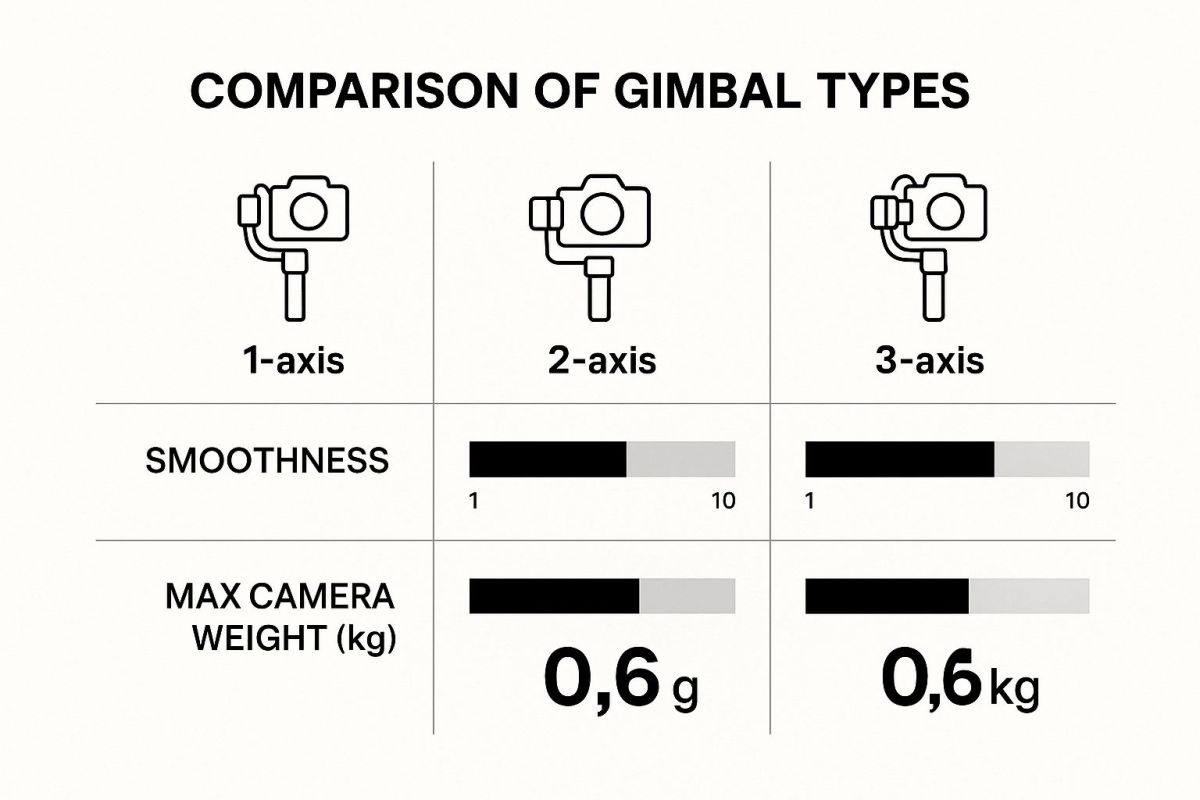
As you can see, the 3-axis gimbal is the undisputed champion for smoothness. It's the standard for any kind of professional aerial work because it counteracts movement on every axis—pitch, roll, and yaw—to deliver buttery-smooth video. A great camera on a poor gimbal is a waste of money. To learn more about getting this pairing right, take a look at our complete guide on selecting a camera for drones.
When it comes down to it, the best drone camera and gimbal system isn’t about having the biggest numbers on a spec sheet. It’s about how all these components work together in harmony to deliver the results you need for your mission, whether that’s creating a cinematic masterpiece or gathering flawless data.
Choosing the Right System for Your Needs
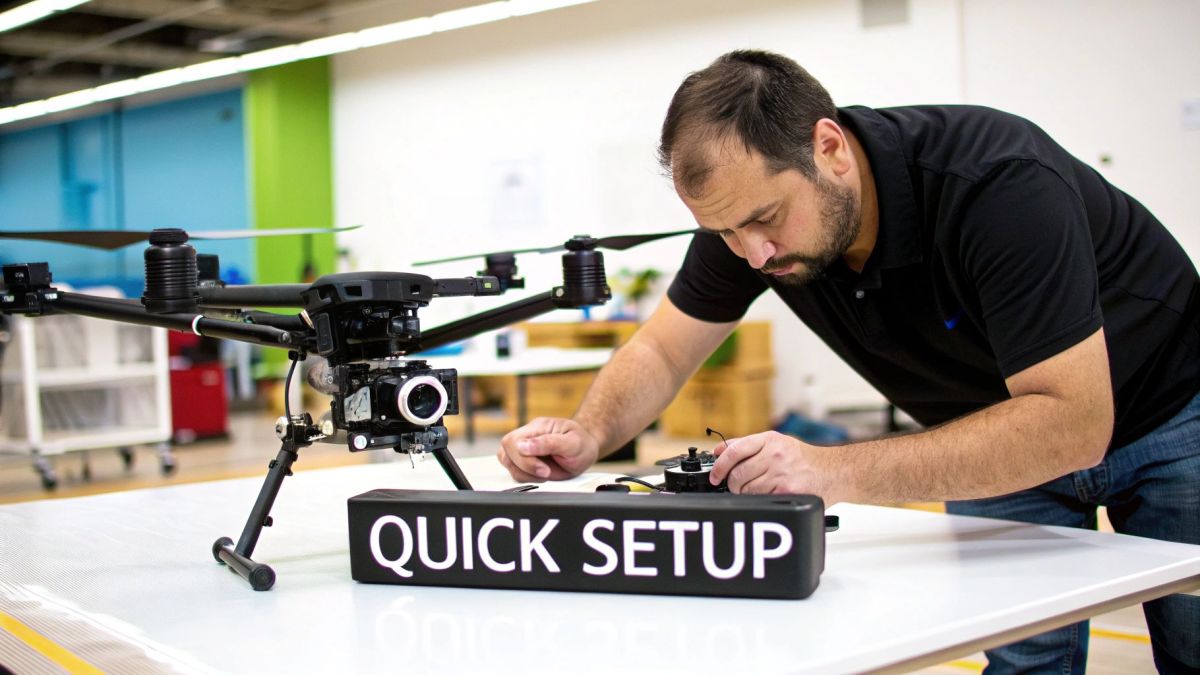
Picking the perfect drone camera and gimbal isn't about grabbing the most expensive rig off the shelf. It’s about finding the right tool for the job. The setup a weekend hobbyist needs for family holiday videos is worlds apart from what a professional surveyor requires to map a construction site.
So, let's move from the technical specs to the real world. Your mission should be your north star. Are you chasing dirt bikes through the forest or capturing a serene sunrise over the ocean? Is vibrant colour more critical than performance in low light? Answering these questions first will cut through the noise and point you to a system with features you'll actually use.
For Hobbyists and Content Creators
If you're flying for fun or building a YouTube channel, your priorities are simplicity, portability, and great-looking footage without a lot of fuss. You don't need a cinema-grade setup for a travel vlog. The best choice is almost always an integrated system where the camera and gimbal come as a single, ready-to-fly unit.
Look for these key features:
- Good Resolution: A solid 4K camera is the sweet spot. It delivers crisp, clean video that looks fantastic online.
- Reliable 3-Axis Gimbal: This is a must-have. It's the secret sauce behind that smooth, professional-looking footage.
- Intelligent Flight Modes: Features like ‘follow me’ or automated flight paths are a massive help, letting you focus on the shot while the drone handles the flying.
For Real Estate and Commercial Video
When you've got clients to impress, the game changes. A real estate photographer, for instance, desperately needs a camera with excellent dynamic range. This is what lets them capture both the bright, sunny garden and the details inside the dimly lit living room in one shot, without blowing out the highlights or crushing the shadows.
A gimbal with smooth, slow, and predictable movements is also crucial for those elegant, sweeping shots that sell a property. Higher frame rates, like 60fps or more, become important too, as they let you create beautiful slow-motion sequences that add a polished, cinematic feel to any marketing video.
The best investment is a system that directly solves the challenges of your specific application. A high-end camera is wasted if its key features don't align with your primary shooting scenarios.
For Industrial and Professional Jobs
In fields like surveying, mapping, or infrastructure inspection, the drone stops being a camera and becomes a data-gathering tool. Precision is everything. This is where you'll see specialised payloads on more powerful, robust drones.
For these applications, the focus shifts to:
- High-Resolution Sensors: You need to capture every tiny detail to build accurate 3D models or spot a hairline crack in a bridge.
- Interchangeable Payloads: The ability to swap a standard camera for a thermal imager or a LiDAR sensor is often a necessity.
- Extreme Stability: The gimbal has to hold the sensor perfectly steady, even when the wind is trying its best to push the drone around, to ensure the data is accurate.
For these kinds of demanding tasks, it’s worth exploring a dedicated range of professional UAV drones. They are designed from the ground up for reliability and adaptability. At the end of the day, a smart investment starts with understanding exactly what you need to achieve.
Best Practices for Capturing Stunning Footage
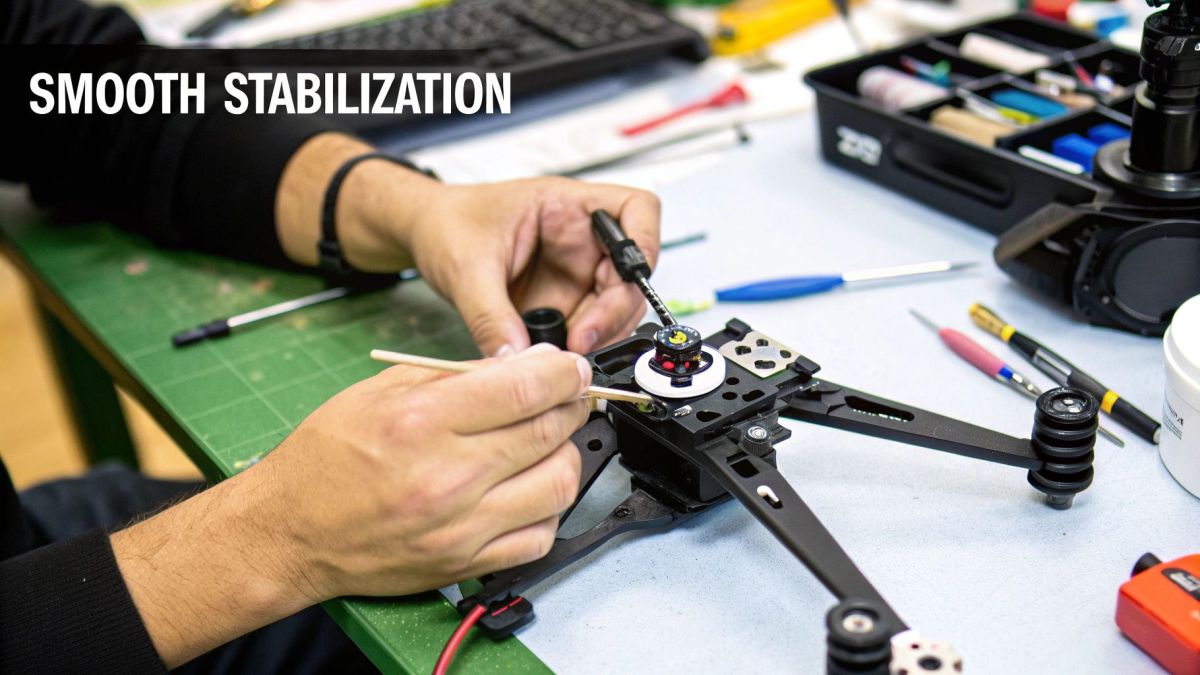
Having a top-notch drone camera and gimbal is one thing, but knowing how to use it is what separates good footage from truly breathtaking shots. It’s the small things you do before and during your flight that make all the difference.
Think of it this way: a pre-flight check is non-negotiable. Before you even think about taking off, calibrate your gimbal. It's a simple step, especially crucial if you’ve been travelling. This ensures your horizon is dead-level and the motors are responding as they should, saving you the headache of crooked shots down the line.
Dialling in Your Camera Settings
Once you’re up in the air, don't just set and forget. Leaving your camera on "auto" is a recipe for inconsistent exposure and weird colour shifts. To really take charge, you need to switch over to manual mode.
A brilliant rule of thumb is the 180-degree shutter rule, a classic from the world of filmmaking. The idea is to set your shutter speed to double your frame rate. So, if you're shooting at 25 frames per second (fps), you’ll want a shutter speed of 1/50th of a second. This little trick creates a subtle motion blur that just looks right to the human eye—smooth and natural.
Another pro move is shooting in a flat or logarithmic (Log) colour profile. Straight out of the camera, the footage will look washed out and dull, but that’s the point! It preserves the maximum amount of detail in the highlights and shadows. This gives you a massive amount of flexibility when you get to the editing suite to colour grade and create a rich, cinematic final product.
Your goal should be to get as much data as possible from the sensor. A flat picture profile is like a digital negative, capturing more information in the highlights and shadows for you to work with later.
Mastering Cinematic Drone Movements
Nothing screams "amateur" more than fast, jerky movements. The key to that professional look is to be smooth, slow, and deliberate. Imagine your drone isn't a drone at all, but a camera on a massive, invisible crane.
Here are a few classic camera moves you should get comfortable with:
- The Reveal: Start with something in the foreground—a tree, a rock, a building—and slowly fly up or sideways to reveal the epic landscape behind it. This builds a sense of discovery and adds incredible scale to your shot.
- The Orbit: This is a fantastic way to show off a subject. Fly in a slow, perfect circle around a house, a landmark, or even a person, keeping the camera locked on them the whole time.
- The Dolly Zoom: This is a bit more advanced but creates an incredible effect. You fly the drone either towards or away from your subject while zooming the lens in the opposite direction. It produces that dramatic, slightly disorienting look you see in big-budget films.
When you bring it all together—solid prep, manual camera control, and smooth, intentional flying—you’ll start to see the real power of your drone camera and gimbal. You'll be creating compelling visual stories, not just taking simple aerial pictures.
Sorting Out Common Gimbal Problems
Even the best drone cameras and gimbals can act up sometimes, but don't worry—most of the common headaches have surprisingly simple fixes. If your footage is suddenly looking crooked or your gimbal is making jerky, unpredictable movements, it’s usually not a sign of a major disaster. A few straightforward checks will often get you back in the air in no time.
Your first step for almost any gimbal-related weirdness should be a gimbal calibration. Think of it as hitting the reset button on the gimbal's sense of balance. Just about every drone controller app has this function built right in. All you need to do is place your drone on a perfectly flat surface and let the software work its magic. It takes less than a minute and re-teaches the gimbal what "level" is.
Checking for Physical and Software Glitches
If a calibration doesn't do the trick, it's time for a quick physical inspection. An error message like "gimbal overload" is a dead giveaway that something is physically getting in the way. Power the drone down completely and gently move the gimbal through its full range of motion. You’re looking for anything that might be blocking it—a stray twig, a blade of grass, or even those little plastic clips used for transport. Forgetting to remove those is something we’ve all done!
Make sure the gimbal can move freely without catching on anything. Even the tiniest bit of resistance can make the motors struggle, which translates directly into those annoying jitters you see in your video.
A rock-solid drone camera and gimbal setup is the backbone of any professional aerial work. In Australia, the drone market is booming—projected to hit USD 2.76 billion—precisely because industries like real estate, media, and farming need that perfectly smooth, reliable footage. It's simply not optional. You can learn more about the trends shaping the Australian drone industry.
Finally, don't forget to keep your firmware updated. Drone manufacturers are constantly releasing new software to squash bugs and improve how everything works, including the gimbal. An old firmware version can easily cause communication breakdowns between the drone's main brain and the gimbal, leading to all sorts of performance issues. A quick check for updates before you head out is one of the easiest ways to avoid a lot of frustration.
Got Questions? We've Got Answers
Even when you have all the right gear, questions are bound to come up. Let's tackle some of the most common ones I hear about drone cameras and gimbals.
Can I Use a Drone Without a Gimbal?
Technically, you can fly a drone without a gimbal, but I wouldn't recommend it if you care about your footage. The video would be a shaky, jarring mess.
Think about it: the camera would capture every single vibration, every little tilt, and every gust of wind the drone feels. For that smooth, professional-looking video everyone wants, a drone camera and gimbal working together is absolutely essential.
What Is the Difference Between a 2-Axis and a 3-Axis Gimbal?
A 2-axis gimbal steadies the camera on two axes: pitch (tilting up and down) and roll (tilting side to side). This is a good start, but it completely misses the yaw axis, which is the left-to-right panning motion. This often leaves the footage with a weird, unnatural horizontal shake.
A 3-axis gimbal is the real deal. It corrects for pitch, roll, and yaw, giving you total stabilisation. This is what creates that signature buttery-smooth cinematic look. If you're serious about your video work, a 3-axis gimbal isn't just a feature—it's the standard.
At its core, a gimbal’s job is to completely isolate your camera from the drone's movements. A 3-axis system just does this far more effectively, and the result is footage that looks polished and professional.
How Often Should I Calibrate My Gimbal?
I always make it a habit to calibrate my gimbal before the first flight of the day, especially if I've been travelling. It's a simple step that ensures your horizon line is perfectly level and the motors are working as they should.
You should also do a quick calibration anytime you see a crooked horizon in your shot or get a gimbal error message on your screen. Trust me, spending a minute on this can save you a world of frustration later.
Ready to elevate your aerial capabilities with a system built for precision and reliability? Innoflight International designs and manufactures advanced unmanned aerial systems tailored for commercial and enterprise applications. Find the perfect platform for your mission by exploring our range of customisable drones.