Optimising your supply chain isn't just about making things run a bit smoother. It's about building an efficient, resilient, and agile network that can handle the pressures of the modern world. We've moved past the point of reactive fixes. Now, it's about getting ahead of rising costs, geopolitical instability, and fickle consumer demand—all without letting your profits slide.
Frankly, it's a critical survival strategy, not just another business improvement project.
Confronting Modern Supply Chain Pressures
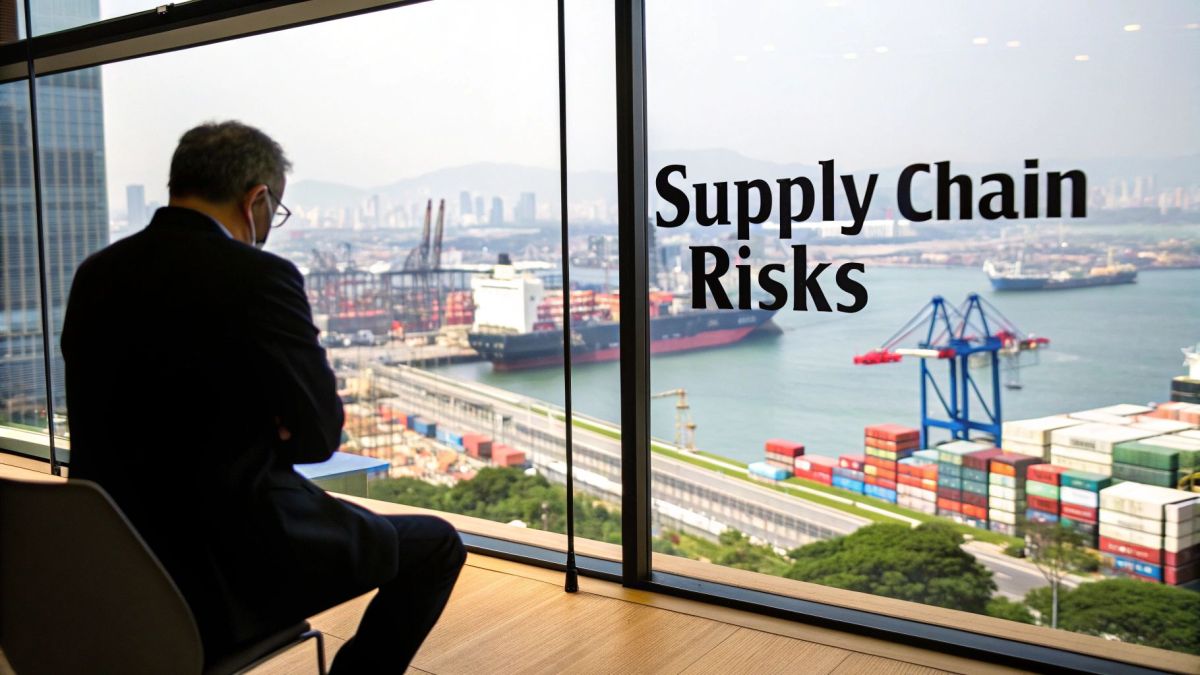
Let's be honest, managing a supply chain today can feel like you're constantly fighting fires. That persistent negative feeling in the industry isn't just talk; it reflects the real, tough challenges that business leaders are up against every single day. The pressure to swallow rising operational costs is huge, forcing a difficult balancing act.
Here in Australia, that reality is especially sharp. Industry sentiment is still deeply negative, with a net balance of -95, which tells you just how worried leaders are. While a hefty 68% of businesses are bracing for higher input costs, only 52% feel they can pass those on by raising their prices. According to the Australian Industry Outlook 2025, this gap highlights just how urgently we need to find efficiencies to protect our margins.
This pressure-cooker environment means companies have to look inwards for savings, because simply hiking prices for customers who are already feeling the pinch isn't a sustainable option.
The Impact of Global Uncertainty
On top of direct costs, global tensions and trade issues throw another spanner in the works. What used to be a fairly predictable global trade map is now a minefield of surprise tariffs, shipping lane chaos, and political instability that can blow up even the best-laid plans.
This constant state of flux makes long-term planning incredibly difficult. A sourcing strategy that was a winner six months ago could be a financial dead-end today. To cope, you need a supply chain that isn't just efficient, but also nimble and tough.
Optimisation is no longer about shaving a few percentage points off expenses. It's about building a robust operational backbone that can withstand external shocks and adapt in real-time.
Why Optimisation Is No Longer a Choice
The challenges are clear, but seeing them for what they are is the first step toward finding real solutions. The key issues forcing businesses to take action right now are:
- Protecting Profit Margins: If you don't optimise, rising costs for fuel, labour, and materials will eat directly into your bottom line. Simple as that.
- Meeting Customer Expectations: Customers don't care about the turmoil behind the scenes. They still expect fast, reliable delivery.
- Maintaining Competitive Advantage: An inefficient supply chain is a serious liability. It leaves the door wide open for more agile competitors to steal your market share.
Ultimately, optimising your supply chain has shifted from a "nice-to-have" project to a core, ongoing business function. It's the only way to navigate today's turbulent environment and set yourself up for future growth.
Building a Resilient and Cost-Effective Network
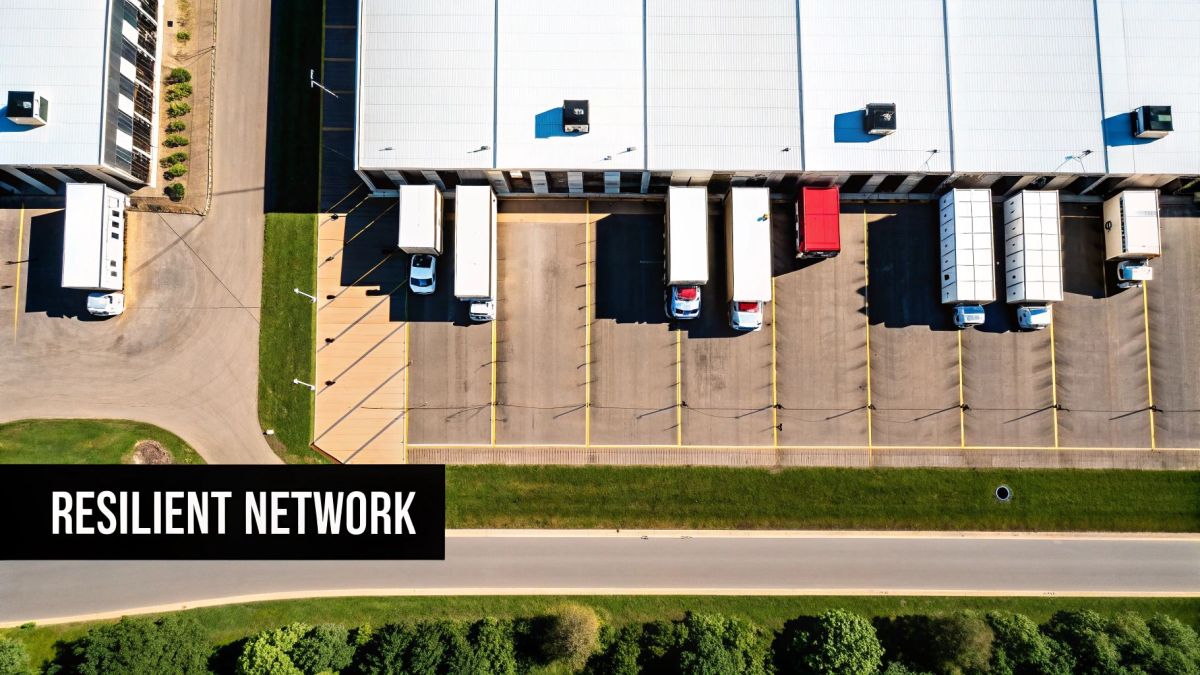
Real resilience in a supply chain isn't just about weathering a storm; it's about building a network so strong that disruptions are little more than a minor inconvenience. It’s a proactive game plan that keeps your business humming while keeping a firm grip on costs. This means taking concrete steps, like placing warehouses strategically to avoid logistics snarls or diversifying your suppliers so one broken link doesn't snap the whole chain.
For businesses here in Australia, this kind of strategic thinking is absolutely vital. A recent survey of over 500 senior supply chain leaders revealed that 38% are grappling with cost as their primary hurdle. Even more telling, one in five feel their supply chain gives them zero competitive edge.
The good news? The same report from TMX Transform shows that a cleverly designed network can cut logistics costs by 10–20% and improve service at the same time. This isn’t about minor adjustments; it's about a ground-up redesign that syncs your physical footprint and inventory choices with your big-picture growth and sustainability targets.
Don't Put All Your Eggs in One Supplier Basket
Relying on a single supplier, especially if they’re located in a volatile region, is a gamble you can't afford to take. Just think about it—if a natural disaster or a sudden trade war affects your main component manufacturer, your production could grind to a halt overnight.
The solution is to build a safety net. Pinpoint your most critical materials and find at least one alternative supplier, ideally in a completely different part of the world. Yes, it might add a bit of admin work upfront, but that's a small price to pay for security. This strategy drastically lowers your risk and, as we explore in our guide on reducing the total cost of ownership, it's a smart financial move in the long run.
Place Your Warehouses and Distribution Centres Where They Count
Where you keep your stock directly affects how quickly you can deliver and how much you pay for transport. That warehouse location that made perfect sense five years ago could now be a major drain on resources, thanks to shifting customer bases or soaring fuel costs.
Dive into your sales data to see where your customers are actually located. Instead of a single, massive warehouse, you might find that setting up smaller, regional distribution centres closer to these hubs makes more sense. This "hub-and-spoke" approach can slash those last-mile delivery costs and keep your customers happy.
A well-placed distribution centre can do more than just cut fuel costs; it can shorten lead times from days to hours, creating a powerful competitive advantage that customers will notice.
This redesign also gives you built-in backup. If a flood or a local strike takes one facility offline, you can reroute orders from another location without missing a beat.
Make Your Inventory Strategy Work for You
Your inventory strategy needs to be smarter than just "just-in-time" or "just-in-case." It should be a direct reflection of what your business is trying to achieve.
- High-growth products? Keep more stock on hand. You don't want to miss a sale because you couldn't keep up with a sudden surge in demand.
- Steady, predictable sellers? This is where you can run a leaner operation to keep holding costs down.
- Hitting sustainability targets? Look for suppliers who use eco-friendly packaging or are closer to home to shrink your carbon footprint.
To put it all together, here's a look at the core elements that create a supply chain built for the long haul.
Key Pillars of a Resilient Supply Chain Network
| Strategy Pillar | Actionable Steps | Primary Benefit |
|---|---|---|
| Supplier Diversification | Identify critical materials and secure at least one alternative supplier in a different geographical region. | Mitigates risks from geopolitical events, natural disasters, and single-source dependency. |
| Strategic Footprint | Analyse customer data to place warehouses and distribution centres closer to key markets. Adopt a hub-and-spoke model. | Reduces last-mile delivery costs, improves delivery speed, and builds network redundancy. |
| Aligned Inventory | Tailor stock levels to product lifecycle and business goals (e.g., higher for growth, leaner for stable). | Optimises cash flow by minimising holding costs while ensuring product availability for key items. |
By viewing your supply chain as a dynamic asset, not just a cost centre, you turn it from a reactive liability into a powerful engine for reliable, profitable growth.
Using Technology for Smarter Supply Chain Decisions

Technology is your best ally for getting supply chain management right. It helps you move from constantly putting out fires to making strategic, forward-thinking moves. We're not talking about impossibly complex enterprise systems, but smart, high-impact tools that give you a real, measurable edge.
The whole point is to stop relying on guesswork. By using data analytics and artificial intelligence, you can build demand forecasts that are actually accurate. This simple shift helps you cut down on costly excess inventory while avoiding the pain of a stockout during a busy period. It’s a direct win for your bottom line.
Harnessing Real-Time Data and Visibility
One of the most practical game-changers has been the Internet of Things (IoT). You can now attach small, affordable sensors to shipments, pallets, or even individual items. These little devices send back a constant flow of data on location, temperature, humidity, and general condition.
Suddenly, you have a level of visibility you could only dream of before. Imagine knowing exactly where a critical shipment is, second by second. Or getting an alert on your phone the moment a temperature-sensitive product is in danger. This isn't science fiction; it’s a practical way to prevent losses and give your customers delivery estimates you can both trust.
All this real-time data can be fed into a central system, effectively creating a "digital twin" of your supply chain. This model lets you see everything at a glance and even run simulations. You can test how your network would cope with a sudden port closure or a massive spike in demand, all without any real-world risk.
Turning Data Into Predictive Insights
Just collecting data isn't enough. The real magic happens when you use that information to predict what's coming next and make smarter decisions. Modern analytics platforms are brilliant at spotting hidden patterns in your sales figures, supplier performance, and shipping routes.
For example, an AI model can look at your historical data, then cross-reference it with things like public holidays or even weather forecasts, to predict demand with incredible accuracy. That means you can finally order the right amount of stock at precisely the right time, freeing up cash flow and warehouse space.
By combining AI with your operational data, you build a system that doesn't just tell you what happened yesterday—it helps you decide what to do tomorrow. This proactive approach is the core of modern supply chain management.
For many businesses, especially in manufacturing, the key to overcoming rising costs and supply chain chaos is to centralise all this information. Implementing a dedicated ERP Software for the Manufacturing Industry provides that single source of truth, making every decision a whole lot smarter.
Integrating Advanced Surveying and Monitoring Tools
If your business manages large physical assets—think infrastructure projects, mine sites, or sprawling farms—technology offers some incredibly specialised tools. Unmanned aerial systems (UAS), or drones, fitted with high-precision LiDAR scanners can completely change how you monitor and manage your operations.
Here's what that looks like in the real world:
- Rapid stockpile surveys: Get precise volume calculations in a few hours, not a few days.
- Infrastructure integrity monitoring: Inspect pipelines, power lines, and transport routes for damage without sending a single person into a high-risk area.
- Agricultural yield optimisation: Analyse crop health and soil conditions across vast areas to make data-backed farming decisions.
The data you get from these drones is phenomenally detailed, often down to millimetre-level accuracy. This information plugs straight into your management systems, giving you critical insights for planning and maintenance. The first step is finding the right software for UAV operations to make sure this aerial data fully integrates with your supply chain decisions, creating a far more dynamic and responsive process.
Embracing Sustainable and Green Logistics
Sustainability in logistics has moved way beyond being a buzzword for corporate reports. It’s now a fundamental part of running a smarter supply chain. Getting on board with green practices isn't just for show—it's about building a more efficient, resilient, and ultimately, more profitable business. This means we need to think past basic compliance and start actively hunting for ways to shrink our environmental footprint.
Even small tweaks can have a surprisingly big impact. A classic example is route optimisation. When you find the most efficient path for your fleet, you’re not just cutting down on fuel consumption; you’re directly lowering operational costs and slashing carbon emissions at the same time. For anyone in logistics, learning and applying practical strategies to boost semi-truck fuel economy is a clear win-win, helping both the planet and the bottom line.
Adopting Greener Operational Practices
To really make a difference, you need to look at your entire supply chain, from how you source raw materials all the way through to that final delivery. It’s all about making deliberate choices at every stage to cut down on waste and boost efficiency.
Here are a few practical places to start:
- Sustainable Packaging: It’s time to move on from single-use plastics and oversized boxes. Look for recycled, biodegradable, or even compostable packaging options that get the job done without leaving a mountain of waste behind.
- Supplier Vetting: Start partnering with suppliers who are on the same page when it comes to environmental responsibility. Don't be afraid to ask them about their green initiatives, certifications, or even their labour practices.
- Waste Reduction: Kick off programs in your warehouses and distribution centres to minimise waste. This could be anything from better inventory management to prevent products from expiring to simple recycling programs for cardboard and plastic wrap.
This push for sustainability is reshaping the whole industry. The Australian supply chain management market is expected to balloon from USD 857.2 million in 2024 to USD 2,149.2 million by 2033, and this green shift is a major reason why. For some businesses, the supply chain accounts for up to 75% of their total carbon footprint, so the pressure to adopt eco-friendly logistics is only getting stronger.
The Business Case for Going Green
Switching to sustainable practices offers a lot more than just environmental brownie points; it’s just good business. Today’s customers are more likely to stick with brands that show they genuinely care about the planet. A solid green reputation can really make you stand out from the competition.
By aligning your logistics with sustainable principles, you're not just reducing your carbon footprint—you're future-proofing your business, building brand loyalty, and often uncovering significant cost savings in the process.
What’s more, the efficiency gains you get from using less energy and creating less waste translate directly into lower operational costs. As new tech emerges, so do the opportunities for green innovation. Take drones, for instance. They’re not just about making deliveries faster; they also have the potential to reduce the carbon footprint of that tricky "last-mile" delivery. It's a big deal, and industry leaders are now actively pursuing green certifications for their equipment, a topic we dive into in our post on Green UAS Certification. Leaning into these changes now is how you prepare your supply chain for a future where being sustainable and being profitable go hand in hand.
Building Real Partnerships Across Your Supply Chain
Optimising your supply chain isn't just an internal job. The truth is, your network is only as strong as the relationships you have with your suppliers, distributors, and logistics partners. The real magic happens when you shift from seeing them as just another transaction to treating them as genuine collaborators. That's where you find serious agility and reliability.
At the heart of any good partnership is shared visibility and trust. When everyone is working in their own little bubble, small hiccups can quickly turn into massive disruptions. But a connected supply chain can handle the bumps in the road because everyone has the information they need to adjust on the fly, together.
Laying the Groundwork with Shared Data
The first practical step is to tear down those information walls. This means getting away from endless email chains and clunky spreadsheets and moving towards a single platform where everyone sees the same real-time data. A shared data environment gives you a single source of truth for everything from inventory levels to production schedules and shipment statuses.
Imagine your supplier seeing an unexpected spike in your demand for a key component. Instead of you having to make a frantic phone call, they can proactively ramp up their production schedule to meet your needs. This kind of transparency turns reactive firefighting into proactive, strategic planning.
Here’s how you can get started:
- Set up a shared portal: Give your suppliers and distributors secure access to the data they need, like live inventory dashboards or order tracking.
- Automate your data exchange: Use APIs to link your ERP or warehouse management system directly with your key partners' systems. This cuts out the manual work.
- Agree on clear data standards: Make sure everyone is recording and reading information the same way to avoid costly mix-ups.
The goal here is to create a digital handshake between your systems. This allows information to flow freely, just like it would in a strong, real-world partnership. It smooths out the friction and builds a foundation of mutual trust.
Moving Beyond Transactions to Strategic Alliances
Once you have that shared data foundation, you can start elevating your relationships. You move from simple, one-off transactions to building strategic alliances. A strategic partner doesn't just fulfil orders; they actively look for ways to help your business succeed, offering insights and flagging opportunities for improvement.
For instance, a logistics partner who can see your delivery patterns might suggest consolidating shipments or taking different routes to cut your costs and speed up transit times. Or a key materials supplier could give you a heads-up on new, more sustainable materials that could give your product a competitive edge. This level of teamwork only happens when your partners feel valued and have a clear line of sight into your long-term goals.
Nailing Down Your Communication Plan
Technology is a fantastic enabler, but it's the clear communication protocols that really hold everything together. Disruptions are going to happen—it might be a delayed shipment or a quality control issue. When they do, having a pre-defined communication plan is absolutely critical.
This isn't about pointing fingers; it's about solving the problem as quickly and efficiently as possible. A solid protocol outlines who needs to be contacted, what information needs to be shared, and the immediate steps for getting things back on track. This clarity stops minor issues from blowing up, making sure your entire network can respond with speed and coordination. When you build this kind of collaborative environment, you create a supply chain that's not just efficient but genuinely resilient.
Your Action Plan for Supply Chain Optimisation
https://www.youtube.com/embed/scEDHsr3APg
Alright, let's move from theory to action. This is where the rubber meets the road—turning great ideas about supply chain management into tangible results you can actually measure. Think of this as your practical roadmap for getting started.
The first move? A deep, honest audit of your current network. You can’t improve what you don’t understand, so it’s time to get under the bonnet. Dig into your key performance indicators (KPIs)—things like order fulfilment times, how quickly you're turning over inventory, and what you’re spending on transport.
This initial dive will shine a spotlight on the real bottlenecks and inefficiencies that are holding you back.
Setting Realistic Goals and Metrics
Once you have a clear picture of where you stand, you can start setting smart, achievable goals. Vague targets like "improve efficiency" won't cut it. You need something specific and measurable.
For example, a solid goal would be to "cut last-mile delivery costs by 15% within the next six months" or "get our inventory accuracy up to 98% by the end of the year." See the difference? These are goals you can actively work towards and measure.
To keep yourself on track, you'll need the right metrics. Don't overwhelm yourself; just focus on a few KPIs that tie directly to your main objectives.
- Cash-to-Cash Cycle Time: This is a fantastic indicator of overall efficiency. It tells you exactly how long your money is tied up in inventory.
- On-Time In-Full (OTIF): This one's simple but powerful. It measures how often you deliver precisely what the customer ordered, right when they expect it.
- Landed Cost: This gives you the true, all-in cost of a product once it arrives, factoring in transport, duties, and any other fees.
These metrics give you clear, data-driven feedback, so you’ll know for sure if your efforts are paying off. It's about celebrating real wins and knowing when you need to adjust your approach.
Prioritising Your First Tech Implementation
With clear goals in hand, it's time to decide on your first technology upgrade. The key here is not to try and boil the ocean. Don't overhaul everything at once. Instead, pick the one tool that solves your most urgent problem.
Is poor forecasting leading to constant stockouts? Then an AI-powered demand planning tool should be your top priority. Are you completely blind to where your shipments are? Then maybe investing in IoT tracking sensors is the best first step.
This infographic shows how the essential pillars of collaboration—shared data, open communication, and solid partnerships—all feed into a single, cohesive process.
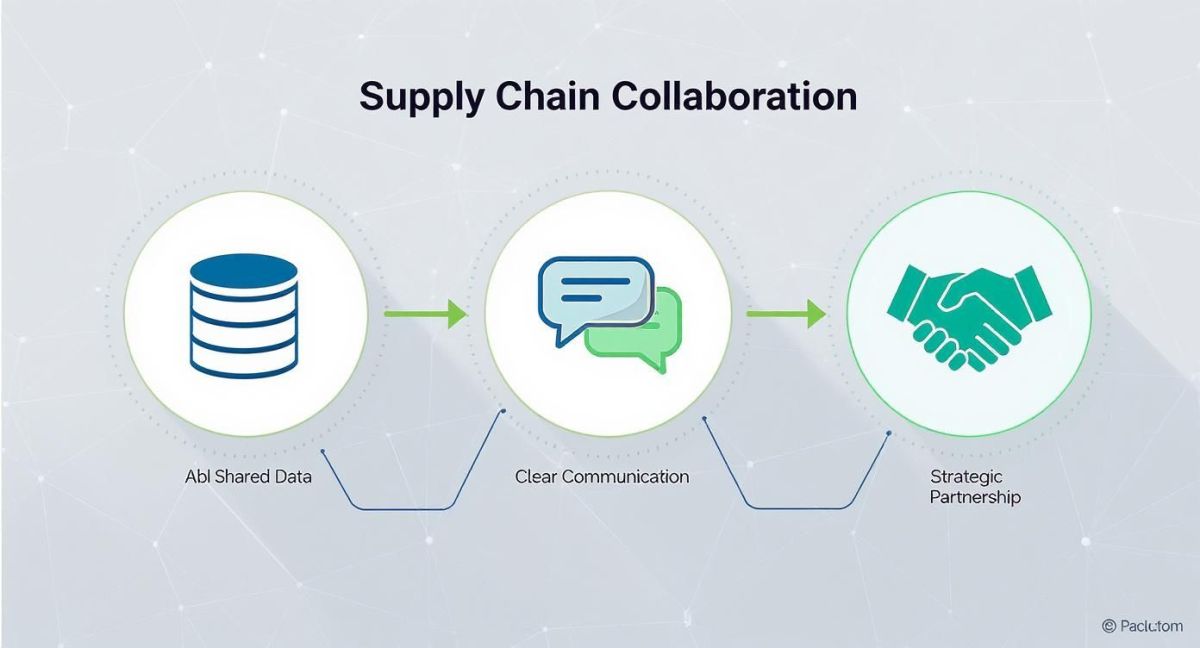
As you can see, successful optimisation isn't a one-and-done task. It's a continuous cycle that's built on a foundation of trust and transparency.
Think of your action plan as a living document. Start with a thorough audit, set clear and measurable goals, and then introduce technology strategically, one piece at a time. This methodical approach is what turns a supply chain from a simple cost centre into a genuine competitive advantage.
Got Questions About Supply Chain Optimisation?
Let's be honest, overhauling your supply chain management is a big deal. It’s completely normal to have a few questions about the potential costs, challenges, and what success actually looks like. I've been asked these questions plenty of times, so let's tackle them head-on.
One of the first things that comes to mind for most leaders is the cost. Yes, there's an initial investment, whether it's new tech or a full network redesign. It's easy to get sticker shock, but you have to think of it as an investment, not just another line item expense. The returns often show up much faster than you’d expect.
Think about it this way: a new warehouse management system might have a hefty price tag, but what if it slashes picking errors by 30% and drops labour costs by 15%? It won't take long for that system to pay for itself. The trick is to start small. Pinpoint your biggest headache, run a focused project to fix it, and once you’ve proven the value, you can build from there.
How Do I Know if It’s Working?
You need to be able to measure your success. It’s not enough to just "feel" like things are getting better. To keep your team motivated and get the higher-ups on board, you need to track specific Key Performance Indicators (KPIs) that really matter to your business.
Here are the metrics I always recommend keeping a close eye on:
- On-Time In-Full (OTIF): This is the big one for customer happiness. It tells you how often you’re delivering precisely what was ordered, exactly when it was promised.
- Inventory Turnover: A higher number here is great news. It means your inventory is moving and your cash isn’t just collecting dust on a shelf.
- Cash-to-Cash Cycle Time: This measures how quickly you can turn your inventory back into cash. The shorter this cycle, the healthier your cash flow.
My best piece of advice? Establish a clear baseline before you change a single thing. Know your numbers inside and out today, so you can truly celebrate the wins tomorrow. This turns optimisation from a guessing game into a solid, data-backed strategy.
What Are the Biggest Roadblocks?
Knowing what’s coming helps you prepare. Funnily enough, the biggest hurdle often isn't the technology—it's the people. Change is hard, and getting your team to embrace new systems or processes can be a real challenge. Your best bet is crystal-clear communication and solid, hands-on training to get everyone comfortable and confident.
Another classic problem is dodgy data. That powerful new analytics platform you just bought? It’s useless if you’re feeding it junk. Before you flip the switch on any new system, you absolutely must take the time to clean and standardise your data. The old "garbage in, garbage out" saying is a cliché for a reason—it will lead to nothing but bad decisions and a lot of frustration.
Finally, remember that this isn't a one-and-done project. Optimising your supply chain is a continuous journey. Markets shift, new tech appears, and your own business will grow and change. The key is to stay agile, be ready to adapt, and always be on the lookout for that next opportunity to make your operations even sharper.
Ready to bring a new level of accuracy and efficiency to how you manage and survey your assets? Innoflight International has the advanced UAS and LiDAR solutions to deliver the data you need for smarter supply chain decisions. Explore our drone platforms and get a quote today.