
At its most basic, an antenna is a clever bit of engineering that turns electrical signals into radio waves, and radio waves back into electrical signals. It’s the invisible link that connects our wireless world. You’ll find countless types of antennas out there, each one shaped and tuned for a specific job, powering everything from drone controls to global satellite links.
What Are Antennas and Why Do They Matter?
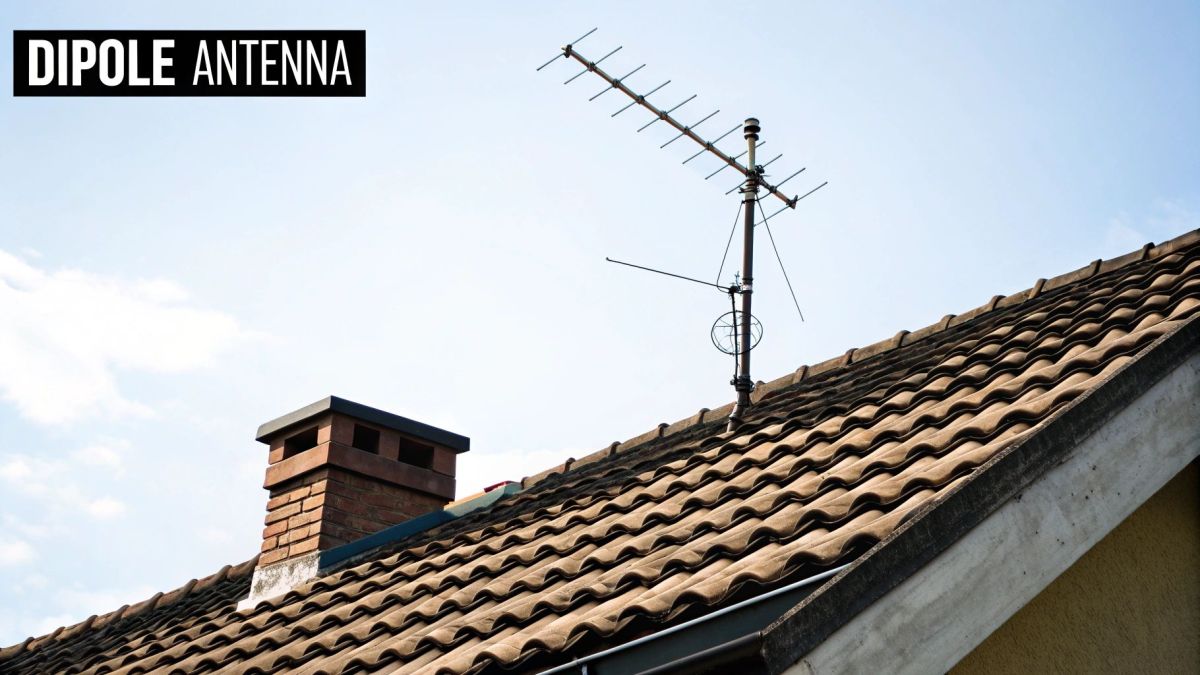
Think of an antenna as the ears and mouth of any wireless device. It’s a specialised transducer that listens for incoming radio signals and broadcasts outgoing ones. Without one, your drone controller, smartphone, and even your car radio would be nothing more than silent, disconnected boxes.
Getting your head around different antenna designs is essential because each one is built for a specific purpose. You wouldn’t use a megaphone for a quiet chat, right? It’s the same idea here. You wouldn't use a massive satellite dish to provide Wi-Fi in your living room. The shape, size, and design of an antenna are what really define its performance.
Key Antenna Concepts
To really understand why there’s such a zoo of antenna types, we need to touch on two fundamental ideas: frequency and gain. Don't worry, we'll keep it straightforward.
- Frequency: This is the specific radio wave channel an antenna is tuned to, just like a radio station. An antenna designed for low-frequency AM radio will be physically massive compared to the tiny one inside your phone that’s built for high-frequency mobile signals.
- Gain: This tells you how well an antenna focuses its signal in a particular direction. A high-gain antenna is like a spotlight, concentrating all its power in one narrow beam. A low-gain antenna is more like a bare light bulb, spreading its signal out in all directions.
The core principle is simple: An antenna's physical characteristics are directly linked to its function. Its size dictates its operating frequency, and its shape determines its directional properties.
These concepts are absolutely critical in specialised fields like aerial surveying. For example, high-end drone systems often involve integrating high-precision LiDAR, which relies on rock-solid antenna performance for accurate data transmission and positioning. You can see a great example of this in the integration of the Klau Geomatics Brumby LiDAR.
The choice of antenna in these demanding jobs directly impacts the quality and reliability of the data you collect. Ultimately, this trade-off between broad coverage and focused power is the main reason why so many different antenna types exist.
Spotlights and Light Bulbs of the Signal World
When you boil it all down, antennas fall into two main camps based on how they throw signals around: directional and omnidirectional. Getting your head around this difference is the first, most important step to choosing the right gear for your drone.
Let's use a simple analogy to make it crystal clear. An omnidirectional antenna is like a bare light bulb hanging in the middle of a room. It sprays light (or radio signals, in our case) out in every direction, giving you a nice, even spread. It’s not focused, but it covers everything around it.
A directional antenna, on the other hand, is a spotlight. It gathers all its power and blasts it out in a tight, focused beam. You lose that all-around coverage, but you gain a much stronger, longer-reaching signal in one specific direction. So, the choice is pretty clear: do you need broad coverage or a powerful, targeted link?
Omnidirectional Antennas Explained
Because they send signals out in a 360-degree pattern, omnidirectional antennas are perfect for situations where you're not sure where the other device will be. Think about your Wi-Fi router at home—it needs to connect to your phone in the kitchen and your laptop in the study, all at the same time.
They’re the go-to choice for mobile setups where things are constantly moving. A great example is the connection between a drone and the pilot on the ground. The antenna on the drone needs to keep that link solid, no matter which way it’s flying or turning.
The Power of Directional Focus
Directional antennas are the specialists. You pick one when you absolutely need a rock-solid, long-distance connection between two specific points. By funnelling all their energy into a narrow beam, they can push a signal much further and cut through interference more effectively.
Your satellite TV dish is a perfect example from everyday life. It has to be pointed exactly at a satellite thousands of kilometres up in space to pick up that weak signal. If it’s off by even a tiny bit, you get nothing. The same logic applies to long-range drone flights or setting up a wireless link between two buildings.
The choice between omnidirectional and directional is a fundamental trade-off in any wireless system. You're essentially choosing between the convenience of all-around coverage and the sheer performance of a focused, long-range link.
This image below breaks down the key features of two foundational antenna designs, the Monopole and Dipole. These simple designs are often the building blocks for more complex antennas in both categories.
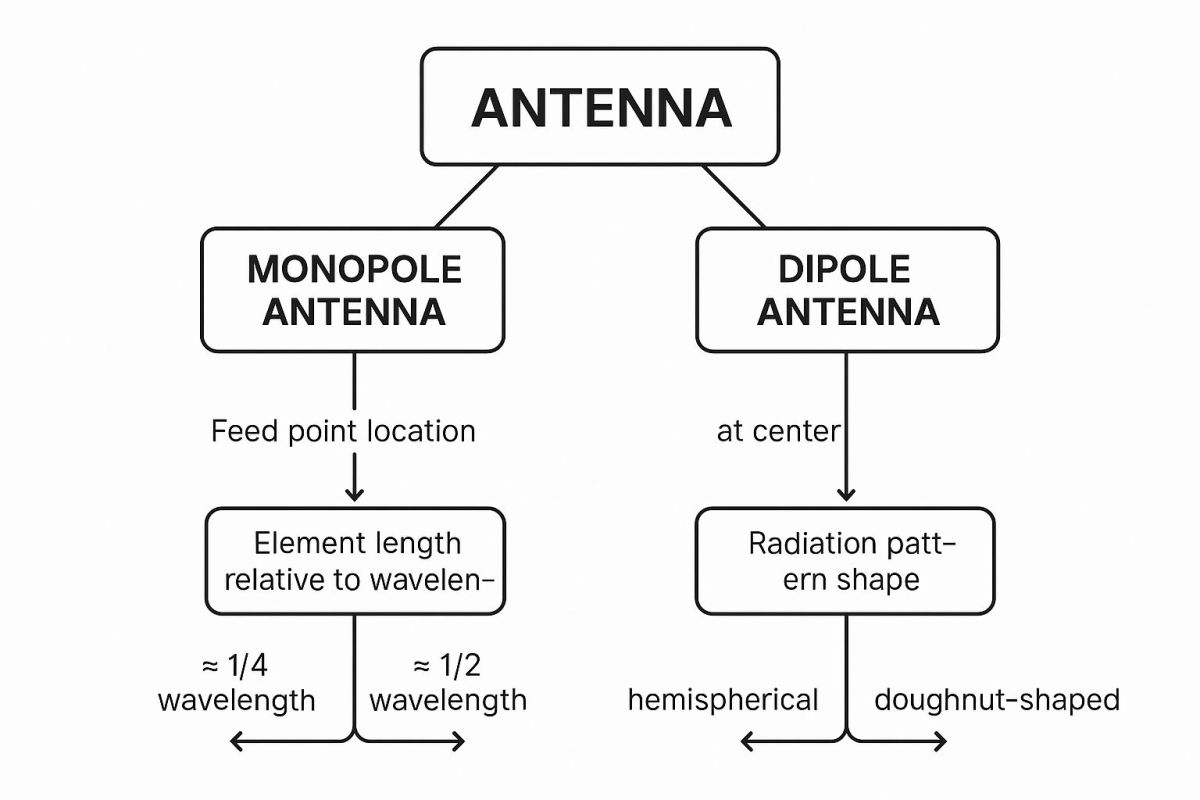
As you can see, things like the length of the antenna elements and where the signal is fed in have a huge impact on the final radiation pattern, determining whether it acts more like a light bulb or a spotlight.
Getting to Grips with Wire Antennas
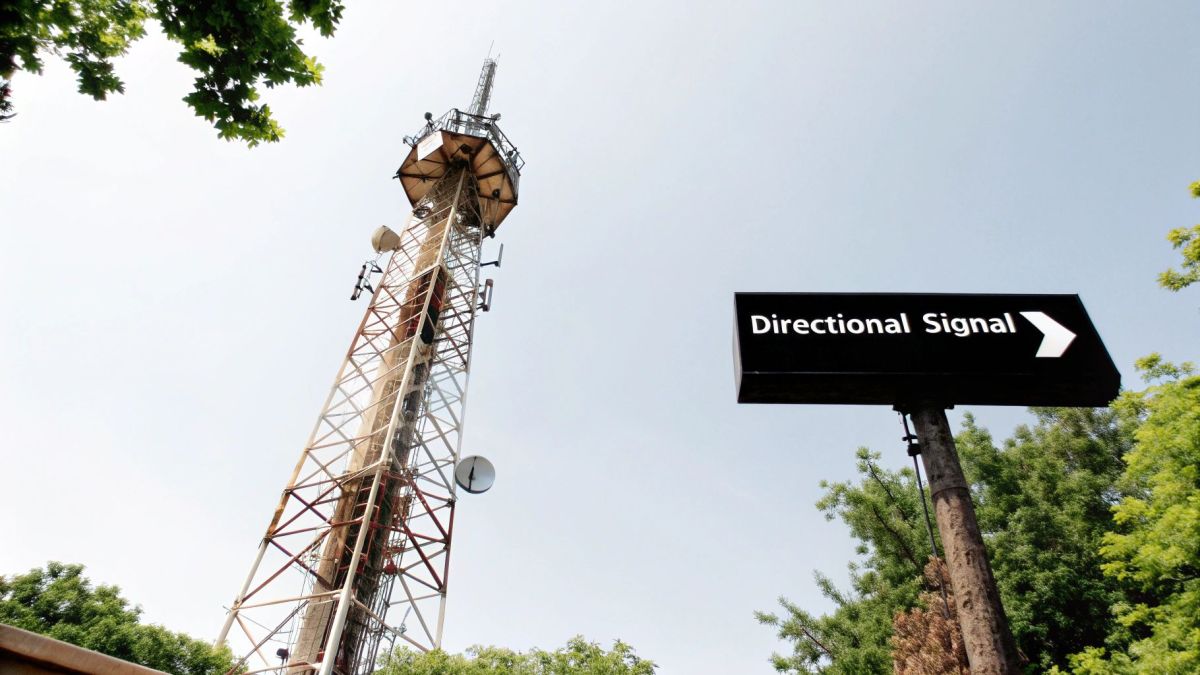
Alright, let's get into the hardware. We'll start with one of the most basic but important types of antennas: the wire antenna. Don't let their simple looks fool you; these designs are the backbone of countless complex communication systems. At their core, they’re often just what they sound like—a piece of wire cut to a very precise length.
This category covers some of the most common antennas out there. Because they're so straightforward to build, they are incredibly reliable and cheap to produce, which is why they are absolutely everywhere. You probably walk past dozens of them every day without a second thought.
The two best-known members of the wire antenna family are the dipole and the monopole. If you can get your head around these two, you'll have a solid foundation for understanding how most antennas work.
The Foundational Dipole Antenna
The dipole antenna is the classic textbook example of an antenna. In its most basic form, it’s just two straight pieces of wire or rod, lined up end-to-end, with the radio signal fed into the small gap right in the middle.
Think of it as the reference point for all other antennas. It's so fundamental that we often measure the performance of more complicated antennas by comparing them back to a simple dipole. Its signal pattern is famously shaped like a doughnut, pushing radio waves out strongly to the sides but sending almost nothing from the tips. This makes it a fantastic omnidirectional antenna for everything from old-school FM radio to modern drone control links.
The dipole is the building block of the antenna world. Many high-gain, complex antennas are actually just carefully arranged collections of multiple dipole elements working together to shape a signal.
Its simplicity is its greatest strength. It offers predictable, reliable performance that engineers have been counting on for more than a hundred years. The magic, however, lies in its length, which has to be perfectly matched to the radio frequency it's built for.
Wavelength and Antenna Length
The physical length of a wire antenna isn't just a random measurement; it’s calculated with precision to resonate with a specific radio frequency. This all comes down to the signal's wavelength—the actual distance a radio wave travels during one complete cycle.
For a standard half-wave dipole, the antenna's total length needs to be roughly half the wavelength of the frequency you want to use. Getting this resonance right is absolutely critical for performance.
- Tuned correctly: When an antenna has the right length, it acts like a perfectly tuned guitar string. It vibrates in harmony with the signal, efficiently turning electrical energy into radio waves and broadcasting them out.
- Tuned incorrectly: If the length is off, it creates a mismatch. Instead of being broadcast, signal energy gets reflected back towards the transmitter, leading to terrible performance and potential damage.
The Ubiquitous Monopole Antenna
A monopole antenna is, in simple terms, half a dipole. It's a single rod or wire mounted over a conductive surface known as a ground plane. This ground plane acts like a mirror for radio waves, creating a virtual "other half" that allows the antenna to radiate a signal properly.
The classic example is the whip antenna on a car. The antenna itself is the monopole, and the car's metal body acts as the ground plane. Monopoles are incredibly popular because they're compact and easy to make, making them perfect for mobile phones, handheld radios, and any vehicle-mounted system where you don't have a lot of space to work with.
Reaching for the Horizon: High-Gain Antennas
While your typical wire antenna is a fantastic all-rounder, some tasks demand something more. When you need to pull in a faint signal from a huge distance, you need to bring in the heavy-hitters: aperture and reflector antennas. These designs are purpose-built for one thing—achieving maximum range and sensitivity.
Think of an antenna's aperture as its 'catchment area' for radio waves. It’s a bit like trying to catch rain in a bucket; a wider bucket catches more water. In the same way, an antenna with a larger aperture can gather more signal energy from the air. Reflector antennas, like the classic satellite dish, take this idea to a whole new level.
They work by using a big, curved surface to collect weak, incoming radio waves and bounce them all to a single focal point where the actual receiver sits. This process gives the signal a massive boost, which is how we can pick up faint whispers from satellites in orbit or even probes exploring the outer solar system.
The Parabolic Dish: The Ultimate Signal Catcher
The most famous type of reflector is the parabolic dish antenna. You've seen them everywhere—from the satellite TV dishes on neighbourhood roofs to the gigantic arrays used by radio astronomers to listen to distant galaxies. That distinct curve isn't just for looks; it's a very precise shape designed to reflect any incoming radio waves directly to one central point.
This focusing effect creates incredibly high gain, making parabolic dishes the kings of directional antennas. But all that power comes with a compromise. They have to be pointed with pinpoint accuracy. If a dish is aimed just a few degrees off its target, the signal can be lost completely. This makes them unsuitable for things that move around a lot, but perfect for fixed installations like the base stations used in high-precision positioning systems. To see how this fits into the bigger picture, check out our guide on what RTK GPS is.
A parabolic reflector acts like an acoustic mirror for radio waves. It takes a sea of weak, scattered signals and concentrates them into a single, powerful stream, turning an inaudible whisper into a clear voice. It’s this principle that makes long-range communication possible.
Where You'll Find Them in the Real World
The influence of these high-gain antennas is massive; they are the backbone of much of our global communications infrastructure. Their ability to create tight, powerful beams of energy makes them indispensable for:
- Satellite Communication: The vital link for television, internet, and phone services delivered from space.
- Deep-Space Exploration: How we get data back from probes like the Voyager spacecraft, which are billions of kilometres from Earth.
- Long-Range Radar: Used in everything from air traffic control to military defence to spot objects hundreds of kilometres away.
This technology is also a cornerstone of our communication networks right here on the ground. For instance, the base station antenna market in Australia recently hit revenues of around USD 476.8 million in a single year. With the continued rollout of 5G, that market is set to grow even more, highlighting just how crucial these advanced antennas have become.
The Smart Antennas Powering 5G and Beyond

So far, we’ve mostly talked about antennas as passive bits of metal, shaped to send and receive signals in a fixed pattern. But what if an antenna could actually think? That’s the core idea behind smart and active antennas, the intelligent systems that form the backbone of modern wireless networks like 5G.
These aren't your average antennas. Instead of just spraying a signal out in all directions and hoping it reaches its target, they can electronically steer their signals with pinpoint accuracy. This is a game-changing technology called beamforming.
Picture yourself trying to talk to a friend in a loud, crowded room. A traditional antenna is like shouting so everyone can hear you. Beamforming, on the other hand, is like leaning in and whispering directly into your friend's ear. It creates a private, crystal-clear connection that cuts through all the background noise.
This ability to aim a focused beam of signal directly at a user’s device—whether it's a smartphone or a drone—massively boosts connection speed, stability, and overall efficiency. It's one of the key ingredients that makes 5G networks so much quicker and more dependable than older technologies.
Handling More Data with MIMO
To really push the boundaries of performance, smart antennas also employ a clever technique known as MIMO, which stands for Multiple Input, Multiple Output. It’s a brilliant way to cram more data into a wireless link without needing more precious frequency spectrum.
Think of it like upgrading a single-lane country road into a multi-lane super-highway. Instead of sending just one stream of data, MIMO uses multiple antennas on both the transmitter (like a mobile tower) and the receiver (your device) to send and receive several data streams all at the same time.
This parallel approach has a huge impact on performance:
- Increased Throughput: Just like more lanes on a highway, more data streams mean you get much faster download and upload speeds.
- Improved Reliability: The system can use the different streams to build in redundancy, making for a far more stable and robust connection, even when signal conditions aren't perfect.
- Greater Capacity: The network can handle more users in the same area without everything grinding to a halt for everyone.
With MIMO, a wireless device isn't just listening with one ear; it's using multiple ears to capture several conversations at once. This multiplies the amount of information that can be exchanged, boosting the performance of the entire network.
The demand for these active systems is absolutely booming. In the Asia Pacific region alone, the active antenna market was valued at USD 572.1 million and is expected to grow by over 67% in just four years, all thanks to the relentless drive to improve 5G network performance. You can dig deeper into this trend over at Cognitive Market Research. This incredible growth really highlights just how essential these intelligent antennas have become.
Specialised Antennas for Everyday Tech
Beyond the big, obvious antennas we see every day, there’s a fascinating world of specialised designs built to solve very specific problems. These antennas are proof of how clever engineering can squeeze amazing performance into a tiny footprint or deliver a solid signal in the most challenging spots. They're the quiet achievers keeping our connected world running.
Two perfect examples of this are patch antennas and Distributed Antenna Systems (DAS). One is all about going small and being invisible, while the other is about spreading a signal far and wide across complex spaces. They show just how tailored antenna design can be.
The Power of the Patch Antenna
A patch antenna is exactly what it sounds like: a flat, low-profile antenna, usually just a small square or rectangle of metal sitting over a larger piece of metal called a ground plane. Because they’re so thin and easy to make, they have become incredibly common in almost every piece of portable tech you can think of.
You’ll find them doing the heavy lifting in devices like:
- Smartphones: Juggling Wi-Fi, Bluetooth, and mobile signals without taking up any precious internal space.
- GPS Units: Reliably picking up faint signals from satellites thousands of kilometres away.
- Drone Systems: Providing a compact and dependable link for both the drone and its controller.
The real beauty of these antennas is that they can be built directly onto a device's main circuit board (PCB). This makes them indispensable for creating the sleek, powerful gadgets we use every day. For high-precision work like drone surveying, solid GPS reception is non-negotiable, which is why patch antennas are a key component in gear like the INF RTK V2 and its base station.
Think of a patch antenna as the ultimate space-saver. It gives you great performance in a flat, unobtrusive package, making it the go-to choice wherever size and tight integration are critical.
Conquering Coverage Dead Zones with DAS
Ever been deep inside a massive shopping centre or on an underground train platform and wondered how you still have perfect mobile reception? The answer is probably a Distributed Antenna System (DAS). A DAS solves the problem of poor coverage by swapping one big, powerful antenna for a whole network of small ones.
Instead of relying on a distant mobile tower, a DAS uses many low-power antennas spread strategically throughout a building or venue. This network blankets the entire area with a strong, consistent signal, getting rid of frustrating dead zones.
These systems are becoming absolutely vital for indoor connectivity. In a recent year, indoor DAS made up nearly 74.88% of Australia’s market revenue, and it’s expected to grow at a huge 20.3% compound annual growth rate as 5G continues to roll out. You can find more detail on the growing DAS market in Australia if you’re interested. It's a brilliant example of how smart antenna placement can overcome environmental hurdles.
Answering Your Top Antenna Questions
As you get to grips with the different types of antennas, a few questions always seem to surface. Let’s tackle some of the most common ones with straightforward answers to help clarify how these critical components work.
What's the Most Common Antenna Type?
You'd be hard-pressed to find a more common or foundational design than the dipole antenna. Its classic structure—just two straight wires or rods fed in the middle—is the building block for countless other, more complex antennas.
You’ll see them used on their own for things like FM radio, but their real influence is as the fundamental element inside more sophisticated designs.
How Do I Know Which Antenna to Choose?
Choosing the right antenna really boils down to what you need to achieve. It’s always a trade-off: do you need broad coverage up close, or a powerful signal beamed over a long distance?
- If you need to cover a wide, local area—like a drone controller communicating with a drone that's flying all around it—an omnidirectional antenna is your go-to. It sends and receives signals in a 360-degree donut shape.
- For linking two points over a great distance, like a ground station connecting with a drone miles away, you need a directional antenna. It concentrates all its power into a narrow, focused beam.
The job determines the tool. There's no such thing as the "best" antenna, only the right one for your specific application. Omnidirectional gives you flexibility; directional gives you range and power.
Does a Bigger Antenna Automatically Mean a Better Signal?
Not always. While for some types, like a big satellite dish, a larger surface area helps gather more signal, size isn't everything. The most important factor by far is how well the antenna is ‘tuned’ to the exact frequency it’s operating on.
A small antenna that’s perfectly tuned for its frequency will always run rings around a massive antenna that’s poorly matched. An antenna's physical dimensions have to be precisely matched to the wavelength of the radio signal. When it's engineered correctly, even a compact antenna can provide incredible performance.
For professional drone systems where perfectly tuned antennas are non-negotiable for reliable data links, you need an expert team. At Innoflight International, we specialise in advanced aerial platforms with custom integrations that make all the difference. Learn more about our drone systems and how we can help.