Ever noticed how some videos look silky smooth, while others are a shaky, unwatchable mess? More often than not, the secret sauce is a nifty little device called a gimbal. Specifically, a 2 axis gimbal is an amazing piece of kit that uses tiny motors and smart sensors to cancel out unwanted camera movements.
It focuses on two key culprits of shaky footage: pitch (the up-and-down tilt) and roll (the side-to-side wobble). By neutralising these, it keeps your shots looking steady and professional.
What a 2 Axis Gimbal Actually Does
Think about trying to carry a full glass of water across a bumpy field. Your arm and wrist instinctively make thousands of micro-adjustments to keep the water from sloshing out. A 2 axis gimbal does the same thing for your camera, but with lightning-fast motors and intelligent sensors.
It's a system built to separate your camera from your own bumpy movements, creating that fluid, cinematic look we all love.
This is especially crucial when you're filming on the move. By correcting for those tilting and rolling motions, it keeps the horizon locked in place and gets rid of the jolts that can completely ruin a great take. For anyone serious about creating polished video content, it's a game-changer.
The Movements It Tames
The real magic of a 2 axis gimbal is in the two specific planes of motion it controls. Getting your head around these will help you know exactly when it’s the right tool for the job.
Below is a quick breakdown of the two core functions of a 2 axis gimbal. This table shows exactly what it stabilises and how that helps your video look its best.
Core Functions of a 2 Axis Gimbal
| Axis of Movement | Description | Primary Benefit |
|---|---|---|
| Pitch (Tilt) | The up-and-down movement of the camera. | Smooths out footage when you're walking, running, or filming from a moving vehicle. |
| Roll | The side-to-side rocking or tilting motion. | Keeps the horizon perfectly level, which is essential for dynamic shots and drone flights. |
By zeroing in on these two key movements, the gimbal gives you a massive improvement in stability without the extra bulk, complexity, and cost of more advanced systems. This makes it a fantastic choice for specific uses, especially in action videography and aerial filming. You can learn more about how this tech works with aerial systems in our detailed guide on the modern drone camera and gimbal.
A 2 axis gimbal is like a balancing expert for your camera. It doesn't stop all movement, but it masters the two most jarring shakes—pitch and roll—turning wobbly, amateur footage into smooth, captivating video.
It's no surprise that these devices are becoming more popular. The Australian gimbal market is seeing solid growth, fuelled by creators in both photography and filmmaking wanting that stabilised, professional edge. This trend really underscores just how valuable high-quality stabilisation has become. You can discover more insights about the Australian gimbal market on 6wresearch.com if you're interested in the numbers. This growing demand just confirms what many of us already know: a good stabiliser is a must-have tool.
How a Gimbal Actually Stabilises Your Camera
To really get your head around how a 2-axis gimbal turns shaky, bumpy video into something smooth and cinematic, you need to peek under the bonnet. The whole setup is like a lightning-fast, high-tech balancing act, with a few key parts working together perfectly.
It’s not magic, but it’s incredibly quick. The system spots unwanted movement and immediately generates an equal and opposite force to cancel it out. This all happens in milliseconds—way faster than our eyes can register—leaving you with footage that looks like it's floating on air.
The Brains of the Operation: The IMU
At the heart of every gimbal is a tiny but brilliant sensor called an Inertial Measurement Unit (IMU). Think of the IMU as the gimbal's inner ear; it has an amazing sense of balance and knows exactly which way is up. It constantly keeps tabs on the camera’s position, picking up even the slightest tilt (pitch) or side-to-side wobble (roll).
This sensor is the first link in the stabilisation chain. When an outside force, like your hand shaking or a gust of wind hitting a drone, jolts the camera, the IMU knows instantly. It fires off a constant stream of data about this unwanted movement to the gimbal's main control board. You can learn more about similar advanced sensor tech in this guide on the Attitude and Heading Reference System.
This diagram breaks down the simple but effective flow from a shaky camera to a smooth shot.
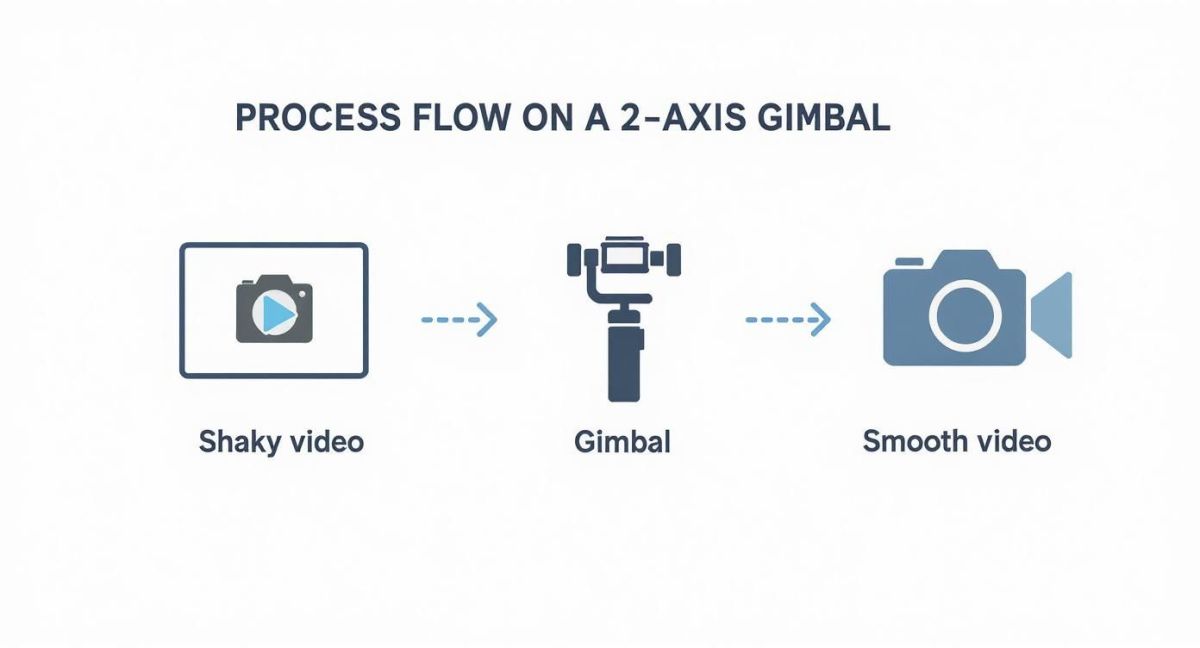
As you can see, the gimbal acts as the middleman, actively fighting against disturbances to deliver a stable, professional-looking result.
The Muscles: Powerful Brushless Motors
Once the IMU sounds the alarm, the signal shoots over to the gimbal's central processor. This control board is the command centre. It takes the sensor data, crunches the numbers, and figures out the exact counter-movement needed to kill the shake.
It then zaps instructions to the brushless motors on the pitch and roll axes. These aren’t your average motors; they're built for speed, precision, and near-silent operation. They are the 'muscles' of the system, capable of making tiny, rapid-fire adjustments.
In short, for every degree your hand accidentally dips the camera forward, the gimbal's motor is told to tilt it back by one degree. The two movements cancel each other out, and the camera stays perfectly level.
This split-second reaction is what creates that illusion of stability. Your camera is technically still being shaken, but the gimbal’s counter-moves are so precise that the effects are completely erased before they ever ruin your footage.
Putting It All Together for Smooth Footage
The magic really happens in the seamless teamwork between the IMU, the control board, and the brushless motors. It’s a constant, three-step dance:
- Detection: The IMU sensor picks up an unwanted tilt on the pitch axis.
- Calculation: The control board gets the data and calculates the exact speed and direction for a counter-move.
- Correction: It tells the pitch motor to move in the opposite direction with equal force, neutralising the initial shake.
This whole process repeats itself hundreds of times a second for both the pitch and roll axes. The end result is consistently steady video, which is why gimbals are now a must-have tool for video producers. This kind of smooth footage is crucial for maintaining strong visual continuity in filmmaking, keeping your audience locked into the story without any jarring distractions. A 2-axis gimbal masters this by focusing all its power on correcting the most common up-and-down and rotational shakes, all in a lightweight and efficient package.
Comparing 2 Axis and 3 Axis Gimbals
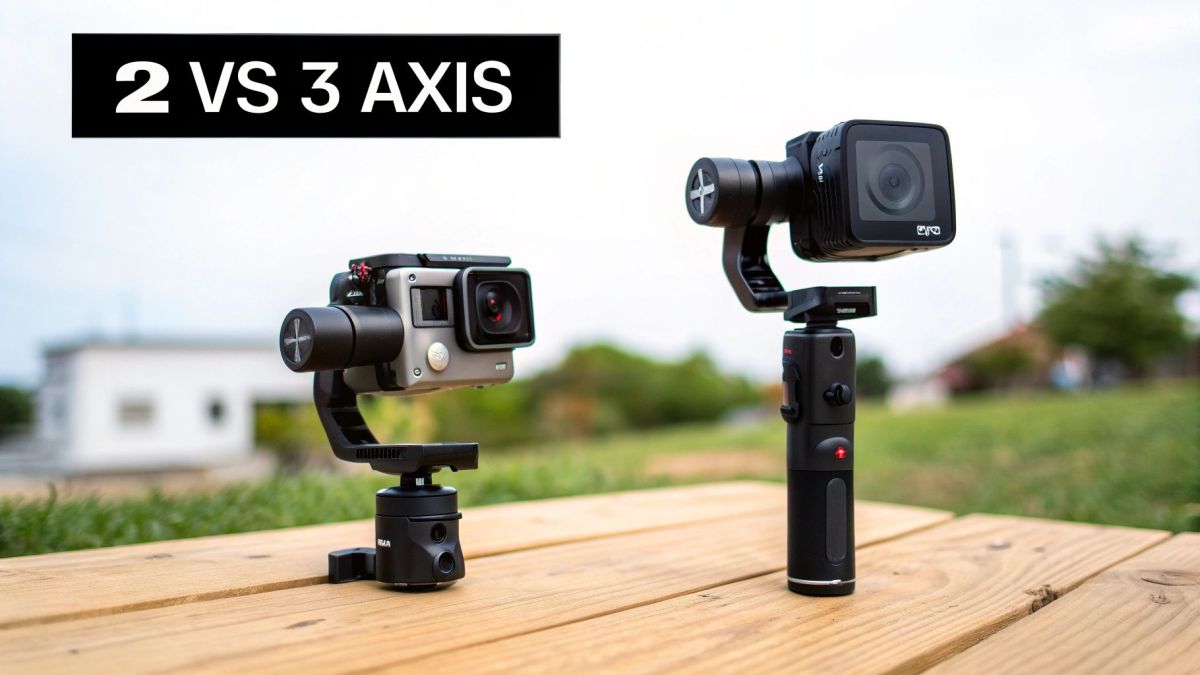
When you're looking for a stabilisation system, one of the first big questions is whether to go for a 2-axis or a 3-axis gimbal. They might look similar, but that one extra axis makes a world of difference in performance, what you can do with it, and even how practical it is for your setup.
The main distinction boils down to the yaw axis. A 2-axis gimbal does a fantastic job correcting for pitch (the up-and-down tilt) and roll (that side-to-side wobble). A 3-axis gimbal handles those too, but it adds a third motor to smooth out yaw—the left-to-right panning motion, like shaking your head "no".
This third axis gives you the ultimate level of stabilisation, but it's not always the right choice. That extra motor adds weight, chews through more battery, and makes the whole device more expensive and complex.
The Critical Third Axis: Yaw
Let’s get practical. Imagine you're filming while walking forward. Your main movements are the slight bobbing from your steps (pitch) and a gentle side-to-side sway (roll). A 2-axis gimbal is brilliant at smoothing these out, giving you a clean, stable shot as you move ahead.
Now, picture yourself trying to circle a statue while keeping it perfectly in the middle of your shot. This calls for smooth, deliberate panning. Without yaw stabilisation, every tiny, unintentional twitch of your hands will show up as a jerk in the footage. This is where a 3-axis gimbal really earns its keep.
The demand for this kind of gear is growing, especially in our part of the world. In Australia, the handheld gimbal market was valued at USD 2.33 million in 2024 and is set to keep climbing. This shows just how much people want good stabilisation, both for professional and personal use.
Practical Trade-Offs: Efficiency vs Perfection
Choosing between a 2-axis gimbal and a 3-axis model really comes down to a classic trade-off: efficiency versus absolute perfection. You have to weigh up your specific needs against the practical limits of the gear.
A 2-axis system is lighter, smaller, and usually has better battery life because it's only powering two motors. This makes it a perfect solution when weight and endurance are your top priorities, like in drone operations.
For drone pilots, every single gram matters. A lighter gimbal means a lighter payload, which translates directly to longer flight times—a massive advantage for big survey jobs or long inspections.
The core difference is simple: a 2-axis gimbal masters stabilisation for forward motion, while a 3-axis gimbal masters stabilisation for dynamic, multi-directional camera movements. Choosing the right one depends entirely on the shot you need to capture.
On the flip side, a 3-axis gimbal is the standard for any kind of cinematic work where flawless, fluid camera movement is a must. It unlocks creative possibilities for complex shots that would be a shaky mess otherwise. For those wanting that buttery-smooth look in a tiny package, devices like the DJI Osmo Pocket 2's integrated gimbal show just how powerful a compact 3-axis system can be.
Direct Feature Comparison
To make the choice clearer, let's break down the key differences side-by-side. This table really highlights the main features and common trade-offs, helping you see where each type of gimbal shines.
2 Axis vs 3 Axis Gimbal Feature Comparison
| Feature | 2 Axis Gimbal | 3 Axis Gimbal |
|---|---|---|
| Stabilisation Axes | Pitch (Tilt) and Roll | Pitch (Tilt), Roll, and Yaw (Pan) |
| Best For | Forward-moving shots, aerial photography, action sports | Cinematic panning, orbiting shots, complex movements |
| Weight | Lighter | Heavier |
| Battery Life | Generally longer | Generally shorter |
| Cost | More affordable | More expensive |
| Complexity | Simpler to balance and operate | More complex setup and balancing |
In the end, it helps to think of a 2-axis gimbal not as a "lesser" version of a 3-axis one, but as a specialised tool. It’s built for situations where the yaw movement is either less important or intentionally controlled by you—like a drone turning in the air or a skier carving down a mountain. Understanding this distinction is the key to picking the right gear for the job.
When to Use a 2-Axis Gimbal
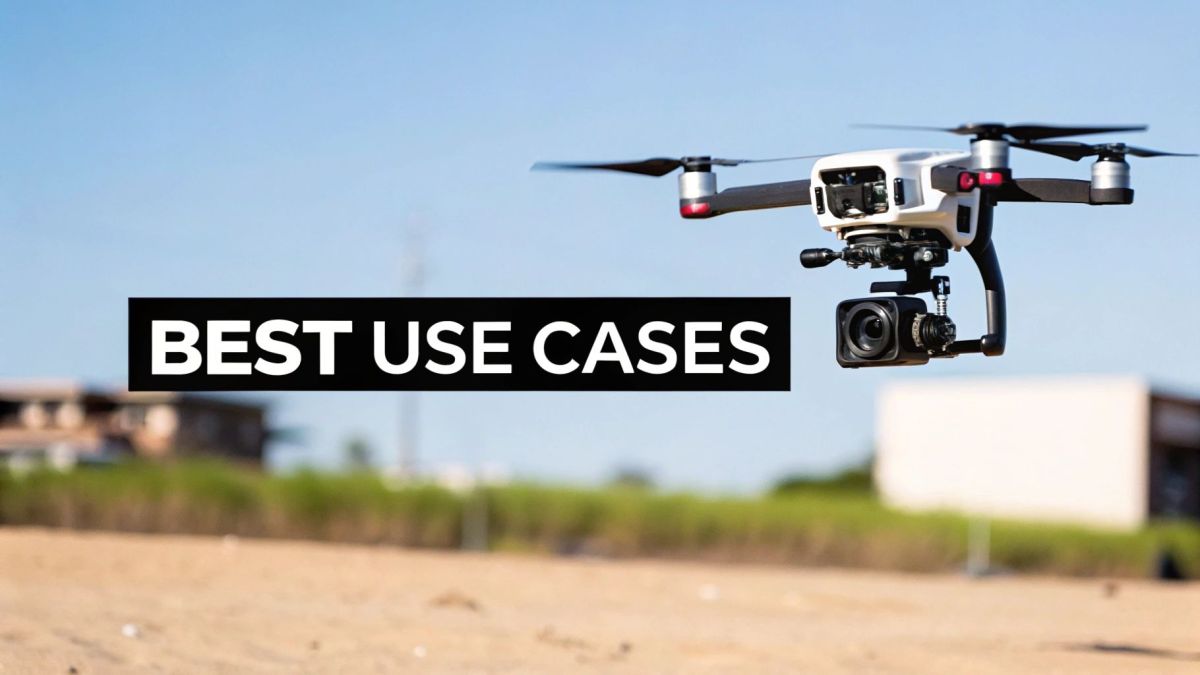
It’s one thing to understand the tech specs, but knowing when a 2-axis gimbal is genuinely the right tool for the job is where the real skill lies. It’s not always about having the most axes; it's about having the right ones. In many situations, its lighter weight and focused stabilisation make it the smarter, not lesser, choice.
Opting for a 2-axis gimbal is often a strategic move that puts efficiency, portability, and longer battery life first. It shines when your camera is mostly moving forward and the main shakes come from vertical bobbing or side-to-side tilting. This makes it an incredibly effective, specialised tool for a few key areas.
Ideal for Drone Operations and Aerial Photography
For drone pilots, every single gram matters, especially in commercial work like agricultural surveys or asset inspections. The lighter design of a 2-axis gimbal is a massive advantage here. Less weight means longer flight times, simple as that. This allows a drone to cover more ground or stay in the air longer during a critical job, potentially saving you from having to land for a battery swap.
When you're capturing aerial photos or flying forward for video, the drone itself handles the yaw (or panning) movement just by turning. The gimbal’s only job is to smooth out the pitch and roll—keeping the horizon level and the shot free from jitters caused by wind gusts or flight corrections.
In these cases, a 3-axis gimbal is often overkill. That extra motor just adds weight and drains the battery faster without offering any real benefit for standard mapping or inspection footage.
The Go-To for Action Sports Footage
Picture this: you've strapped a camera to your helmet for a mountain bike ride. The most distracting movements aren't the deliberate turns you make, but the constant, jarring up-and-down motion from the rough terrain. This is precisely what a 2-axis gimbal is built to fix.
It zeroes in on those pitch and roll movements, transforming what would be shaky, unwatchable footage into a smooth, immersive experience. Because action camera setups need to be as light and low-profile as possible, the compact nature of a 2-axis system is a perfect match.
By focusing its power on correcting the most aggressive shakes in action sports—the vertical and rotational jolts—a 2-axis gimbal delivers 80% of the benefit with none of the extra weight or complexity of a 3-axis system.
It's a fantastic choice for:
- Mountain Biking: Smoothing out bumpy trails and sharp descents.
- Skiing and Snowboarding: Creating fluid shots while carving down a mountain.
- Running and Hiking: Eliminating the jarring footsteps from vlogs or adventure films.
Perfecting Mobile Filmmaking and Vlogging
If you’re a content creator filming on a smartphone or a small mirrorless camera, portability is everything. A 2-axis gimbal strikes a brilliant balance between performance and convenience, making it a go-to for vloggers and mobile filmmakers on the move. It's simply less of a hassle to carry around than its bulkier 3-axis cousins.
When you’re walking and talking to the camera, the main enemy is the bobbing motion from your steps. A 2-axis system smooths this out beautifully, giving your vlogs a much more professional feel without a complicated setup. You can be up and shooting in seconds.
This simplicity is a huge plus. It lets you focus on your content, not on wrestling with your gear. And the longer battery life means you can film all day without stressing about finding a power point. In these scenarios, the 2-axis gimbal isn’t a compromise; it’s the practical, intelligent choice for getting great results.
How to Choose the Right 2-Axis Gimbal
Picking the right 2-axis gimbal can feel a bit overwhelming, but it's much easier when you know what to look for. The trick is to find a gimbal that doesn’t just fit your camera but also slots right into how you like to work. Think of it as finding a reliable partner for your creative projects.
The first thing to nail down, and arguably the most important, is payload capacity. This is simply the maximum weight the gimbal's motors can comfortably support. If you overload it, you’ll end up with jittery video and overworked motors, which completely defeats the purpose of having a stabiliser.
So, before you even start browsing, grab your scales. Weigh your entire camera setup—that means the body, lens, microphone, and anything else you plan on mounting. That final number is your baseline. A good rule of thumb is to pick a gimbal that can handle a little more weight than your current gear, leaving you room to grow.
Looking at the Technical Details
Beyond how much it can carry, a few other specs will tell you if a gimbal is a good match. Think about compatibility, power, and how it’s built. These details make all the difference between a frustrating shoot and getting smooth, professional-looking footage.
Ultimately, a good gimbal should feel like a part of your camera, not some awkward accessory you have to fight with.
-
Camera Compatibility: First off, make sure the gimbal is actually made for your camera model. Most manufacturers have a compatibility list on their website. It's worth checking to see if it supports your camera’s size and can connect for handy features like remote recording. For more on this, our guide to choosing the best camera for drones has some great tips on matching cameras with stabilisers.
-
Battery Performance: You want a gimbal that can keep up with you. Look for a battery life that will last longer than your typical shoot. Most gimbals run for 6 to 12 hours, though this can drop if you’re using a heavy camera. A solid battery means you can focus on getting the shot, not on finding a power point.
-
Build Quality: A well-made gimbal will be sturdy but not heavy, usually built from materials like aluminium alloy or carbon fibre. This ensures it can handle the bumps of filming on the go while being light enough that your arms don't give out after a few hours.
Don't Forget About the Brand and Support
Finally, it pays to consider the company that makes the gimbal. A well-known brand usually means you're getting a more reliable piece of kit, with regular software updates and customer support you can actually reach if something goes wrong. Big names like DJI and Zhiyun have a solid reputation for a reason.
Choosing a gimbal isn't just about killing camera shake. It's an investment in a tool that should make your creative life easier. Focus on payload, compatibility, and build quality, and you'll find a stabiliser that helps you create, rather than holds you back.
The global demand for gimbals gives us a peek into what's important. Across sectors like consumer electronics and entertainment, stable video is no longer a luxury—it's expected. Here in Australia, this trend is driven by the very same needs, pushing the demand for high-quality, dependable gear. If you're interested, you can discover more insights about the global gimbal market on alliedmarketresearch.com. A well-supported gimbal from a reputable company is almost always the better long-term choice.
Answering Your Questions About 2-Axis Gimbals
Even after getting your head around how a 2-axis gimbal works, you probably still have a few practical questions. Let's tackle some of the most common queries I hear, giving you clear, straightforward answers to help you get the most out of your gear. Think of this as your go-to guide for troubleshooting and optimising your setup.
We'll cover everything from simple maintenance, like calibration, to bigger questions about whether this kind of gimbal is the right fit for professional projects. By the end, you'll have some solid advice to solve common headaches before they even start.
How Often Should I Calibrate My Gimbal?
Honestly, pretty often. Regular calibration is the single most important thing you can do to keep your 2-axis gimbal performing at its peak. It's like resetting the gimbal's sense of balance, making sure the sensors are feeding perfectly accurate information to the motors.
You should make it a habit to calibrate your gimbal in a few key situations:
- The very first time you set it up.
- Any time you switch cameras or add an accessory, like a microphone.
- If you ever notice the horizon looks even slightly tilted in your footage.
Thankfully, the process is usually quick and painless. Most modern gimbals have a simple, app-based calibration routine that walks you through the steps in just a few minutes. Adding this to your pre-shoot checklist will prevent the most common performance issues, like horizon drift, and guarantee your footage is as stable as it can be.
Is a 2-Axis Gimbal Good Enough for Professional Videos?
Absolutely, but it really boils down to the specific shot you’re trying to get. It’s all about choosing the right tool for the job, not just grabbing the one with the most features.
For a lot of professional drone shots, especially those involving straight-line flights for mapping or inspections, a 2-axis system is often the smarter choice. Its lighter weight means longer flight times and better efficiency out in the field. The same goes for high-octane action camera footage where the main problem is that up-and-down shake from running or riding – it smooths that out brilliantly without adding unnecessary bulk.
The professional standard isn't defined by the number of axes. It's defined by the quality of the final footage. If a shot only has pitch and roll instability, a 2-axis gimbal is the most efficient tool for the job.
Where you'll notice its limits is during more complex, cinematic moves. If your shoot calls for smooth, deliberate pans or shots where you need to orbit a subject without any jerky side-to-side movement, the yaw stabilisation of a 3-axis gimbal is a must. Many professional videographers own both, picking the one that best suits the creative needs of each shot.
What Are the Most Common Problems I Might Face?
The vast majority of issues you’ll run into with a 2-axis gimbal can be traced back to one of three things: improper balancing, motor vibration, or horizon drift. The good news is that they're all usually easy to fix.
Improper balancing is the number one culprit. If your camera isn't perfectly balanced on the gimbal before you power it on, the motors have to work overtime to keep it level. This is what causes jitters in your footage, drains the battery much faster, and can put a real strain on the motors over time.
Motor vibration or a slight "shudder" is another common one, often caused by incorrect power settings for your camera's weight. Most gimbals let you adjust motor strength in an app; setting it too high for a lightweight camera can cause that high-frequency wobble.
Finally, horizon drift—where the camera slowly starts to tilt to one side during a shot—is almost always a sign that the gimbal's IMU sensor needs a quick recalibration. If you can master balancing and get into the habit of calibrating, you'll solve nearly every problem you'll ever come across.
Can I Use One of These Gimbals with My Smartphone?
You bet. Plenty of 2-axis gimbals are designed specifically for smartphones and are a fantastic way to step up your mobile video game. They are usually lightweight, affordable, and incredibly good at getting rid of that distracting handshake that ruins so many handheld phone videos.
This makes them a perfect tool for vloggers, social media content creators, or anyone who wants to capture more polished, pro-looking videos without needing a big, expensive camera setup. A simple 2-axis gimbal can truly turn your everyday phone into a powerful storytelling tool.
Just be sure to check the compatibility list before you buy. You'll want to make sure the gimbal's clamp can fit your phone's size and that its motors are rated to handle the weight, especially if you have a larger model or use a heavy-duty case.
At Innoflight International, we specialise in advanced unmanned aerial systems and high-precision sensor integrations for commercial and enterprise applications. Our drone solutions are built for reliability and performance, whether you're conducting large-scale LiDAR surveys or detailed asset inspections. Discover our range of versatile drone platforms and custom payloads by visiting our official website.