A Commercial Drone Expo is where the entire unmanned aerial vehicle (UAV) industry comes together. It’s a buzzing hub for engineers, business leaders, pilots, and policymakers—all in one place to see, touch, and discuss the future of drone technology. Think of it as the ultimate gathering for everything from groundbreaking hardware and clever software to complete service solutions.
The World’s Fair for Drones

Calling a Commercial Drone Expo just a trade show doesn't quite do it justice. It's more like a World's Fair for drones. The air is electric with live flight demonstrations, insightful keynotes from industry veterans, and endless opportunities to connect with people who are shaping the future of UAVs.
This is the one place where you'll find every piece of the drone puzzle under one roof. You can get hands-on with the latest heavy-lift drones, see high-tech sensor payloads like LiDAR and thermal cameras in action, and watch software turn raw data into something meaningful. It’s where theory gets real, fast.
Who Attends the Expo and Why It Matters
Walk the expo floor and you’ll see a real mix of people, each there with a clear purpose. This blend of professionals is exactly what makes the event so powerful; it’s a hotbed for new ideas, partnerships, and business deals. You'll bump into seasoned pilots hunting for a new workhorse and CEOs looking for a complete drone program to integrate into their company.
The table below breaks down the main professional groups you'll find at a commercial drone expo and what they're hoping to achieve.
| Attendee Profile | Primary Goal | What They Look For |
|---|---|---|
| Enterprise End-Users | Solve specific business problems. | Drones, sensors, and software to improve safety, efficiency, and ROI in sectors like agriculture, construction, and mining. |
| Engineers & Developers | Showcase innovations and find partners. | Opportunities to demonstrate their latest hardware designs, software platforms, and sensor integrations to a captive audience. |
| Drone Service Providers | Source new gear and find clients. | The best new equipment to upgrade their fleet, learn new techniques, and network with potential enterprise customers. |
| Policymakers & Regulators | Understand industry trends. | Insights into the technology's direction to help shape fair and effective regulations that support safe drone operations. |
This diverse crowd ensures that conversations aren't just about specs and features, but about real-world applications and the future regulatory environment.
More Than Just Hardware
While the drones are definitely the stars of the show, a modern expo is just as much about the brains behind the operation. You’ll find rows of booths dedicated to flight planning software, AI-powered data analytics, and cloud platforms for managing an entire fleet of drones. These are the tools that turn aerial images and data into genuine business intelligence.
A Commercial Drone Expo isn't just a marketplace; it's an educational experience. It’s where professionals gain the critical insights needed to integrate drone technology effectively, ensuring they stay ahead in a rapidly advancing field.
At the end of the day, these events are a must for anyone serious about using drones in their work. They offer a unique chance to get a feel for the market, build crucial relationships, and see firsthand what's coming next for countless industries.
The Evolution of Commercial Drone Technology
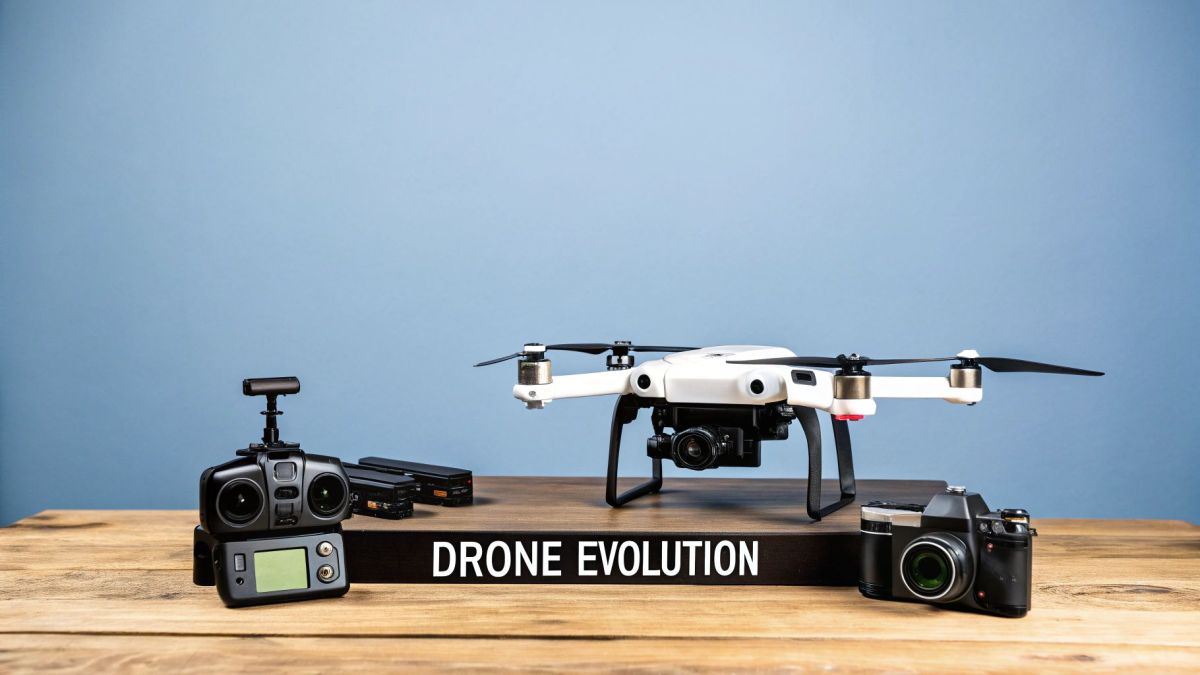
To really get your head around the tech you'll see at a commercial drone expo, it helps to know just how far we've come. It wasn't that long ago when commercial drones were basically just fancy remote-controlled toys, needing a human pilot to guide every single movement. Now, they're intelligent, autonomous systems running on artificial intelligence.
This didn't happen overnight. It was a series of small, crucial steps. Think of it like how the mobile phone evolved; it went from a clunky brick that only made calls to a supercomputer in your pocket. Drones have made a similar leap, transforming from simple flying cameras into smart data-collection platforms for almost every industry you can think of.
This constant improvement is driving some serious industry growth. The Australian drone market, for example, was recently valued at around USD 614 million and is expected to shoot up to USD 1.5 billion by 2033. This boom is tied directly to big strides in automation and AI, which let drones handle complex jobs all on their own. You can dive into more detailed projections about the Australian drone market to get the full picture.
Breakthroughs in Hardware and Power
One of the biggest game-changers for commercial drones has been better battery technology. The early models had notoriously short flight times, often just 10-15 minutes. This made them pretty useless for any large-scale project.
Today's drones are a different story. Thanks to high-density lithium-polymer (LiPo) batteries and much more efficient motors, they can stay in the air for far longer. This means they can finally cover serious ground, whether it's surveying a massive farm or inspecting kilometres of power lines in one go.
The Rise of Advanced Sensors
The real magic of a commercial drone is the data it gathers. This is where sensor technology has completely changed the game. We started with basic cameras, but now we have a whole toolbox of sophisticated sensors.
- LiDAR (Light Detection and Ranging): This tech uses laser pulses to build incredibly precise 3D maps. It’s absolutely essential for accurate land surveying and modelling infrastructure.
- Thermal Imaging: These cameras see heat, making them invaluable for everything from search and rescue missions to finding faulty solar panels or heat leaks in buildings.
- Multispectral Sensors: A favourite in precision agriculture, these sensors pick up light from different spectrums to give farmers a detailed look at crop health and soil quality.
The final piece of the puzzle is machine learning. Drones can now analyse data as they collect it, flagging potential problems in real-time without having to send terabytes of information back to base.
This massive shift from basic hardware to intelligent, sensor-packed systems has opened up possibilities we could only dream of a decade ago. It’s this constant evolution that makes every commercial drone expo a sneak peek into an even smarter, more automated future.
Key Innovations and Trends to Watch
Walking the floor of a major commercial drone expo can be overwhelming. It feels like stepping ten years into the future. To cut through the noise, let’s focus on the trends and tech that are genuinely changing the game right now. These aren’t just abstract concepts; they’re real-world shifts in how drones get work done.
One of the biggest conversations you'll hear is about Beyond Visual Line of Sight (BVLOS) operations. For a long time, the rules were simple: if you can't see the drone, you can't fly it. BVLOS blows that wide open. It’s what allows a drone to inspect kilometres of pipeline or survey a massive farm, all on its own. This single change is unlocking enormous potential for large-scale, efficient missions.
Another trend you'll see everywhere is the 'drone-in-a-box'. Picture a rugged, weatherproof docking station. It houses a drone, keeps it charged, and sends it out on a mission automatically, either on a schedule or when an alarm is triggered. These systems are revolutionising everything from site security and construction monitoring to emergency response, providing eyes in the sky without needing a pilot on-site.
The Era of Autonomous Operations
All these innovations are pushing towards one main goal: greater autonomy. We're moving away from the old model of one pilot flying one drone. The future is a single operator overseeing a whole fleet of smart, self-flying aircraft. Getting this right takes a delicate dance between sophisticated hardware and even smarter software.
At the heart of it all is the advanced software for UAV that manages the entire mission. This is the brain of the operation, handling everything from flight planning and avoiding obstacles to crunching the data it collects. Throw in a healthy dose of artificial intelligence, and you get drones that can make decisions on the fly and spot problems all by themselves.
BVLOS operations and drone-in-a-box systems are the cornerstones of a new era. We're shifting from manual, one-off flights to fully automated, scalable drone fleets that can be deployed at an enterprise level.
Urban Air Mobility and the Future Cityscape
If you look toward the horizon, you'll see more and more talk about Urban Air Mobility (UAM) at every commercial drone expo. This is the big-picture idea of using larger, automated aircraft for things like delivering cargo or even ferrying people across our cities. It's still early days, but UAM is the long-term vision for weaving drones into the fabric of daily life.
As you walk the floor, keep an eye out for exhibitors showing off:
- Advanced Sense-and-Avoid Technology: This is absolutely essential for drones to operate safely in busy, complex airspace.
- Uncrewed Traffic Management (UTM) Systems: Think of it as air traffic control for drones, a digital system needed to manage thousands of autonomous flights at once.
- Heavy-Lift Cargo Drones: These are the workhorses, built to carry serious payloads for logistics and delivery companies.
These three areas—BVLOS, drone-in-a-box, and UAM—are what truly set today’s drones apart. They're turning UAVs from handy gadgets into essential infrastructure for a smarter, more connected world. Spotting these trends at the expo will help you find the people and the technology that are building that future.
How Drones Are Actually Being Used in Major Industries
The real magic of the technology you'll see at a commercial drone expo isn't in the specs on a sheet; it’s in how these tools are being used out in the real world. Drones have moved far beyond being just cool gadgets. They've become essential equipment that delivers serious results across Australia’s biggest industries, tackling age-old problems in completely new ways.
Let’s put it in practical terms. Think of a farmer who can now fly a drone with a multispectral sensor over their crops. It can spot signs of plant stress weeks before the naked eye ever could. This means they can apply treatment exactly where it's needed, saving a fortune on chemicals and improving their overall yield. It's not just a small tweak; it’s a complete rethink of how agriculture is managed.
This kind of real-world value is what's fuelling incredible economic growth. The commercial drone market in Australia, recently valued around USD 772 million, is on track to blow past USD 2 billion by 2032. This isn't just hype; it's a direct result of the practical, problem-solving applications you'll find all over the expo floor.
The table below gives a clearer picture of this impressive growth trajectory.
Projected Australian Commercial Drone Market Growth (USD)
This table offers a snapshot of the market's anticipated expansion, highlighting the key factors pushing this technology forward.
| Year | Market Size (Approx.) | Key Growth Drivers |
|---|---|---|
| 2024 | USD 830 Million | Increased adoption in agriculture and construction; advancements in sensor technology. |
| 2026 | USD 1.05 Billion | Regulatory improvements for BVLOS operations; wider use in public safety and emergency services. |
| 2028 | USD 1.4 Billion | Growth of drone-in-a-box solutions for autonomous inspections; expansion into last-mile delivery. |
| 2030 | USD 1.75 Billion | Integration with AI and machine learning for predictive analytics; greater use in urban air mobility (UAM) trials. |
| 2032 | USD 2.1 Billion | Maturation of UAM networks; mainstream integration of drones into enterprise workflows across multiple sectors. |
As you can see, the growth is steady and significant, driven by technology that solves real business challenges rather than just offering novelty.
Making Work Safer and More Precise
Take the construction industry, for example. For decades, project managers relied on people walking the site to manually survey progress. It was slow and often inaccurate. Now, a single automated drone flight can create a precise 3D model of the entire site in just a few hours. This gives teams a perfect snapshot for tracking progress, managing materials, and spotting problems before they become costly.
The energy sector has seen huge benefits, too. Inspecting power lines, wind turbines, or remote pipelines used to mean sending people up in helicopters or having them make dangerous climbs. Today, a drone equipped with a high-res thermal camera can spot a fault from a safe distance. It's a game-changer for worker safety and helps prevent expensive outages.
The infographic below illustrates some of the key innovations making all of this possible.
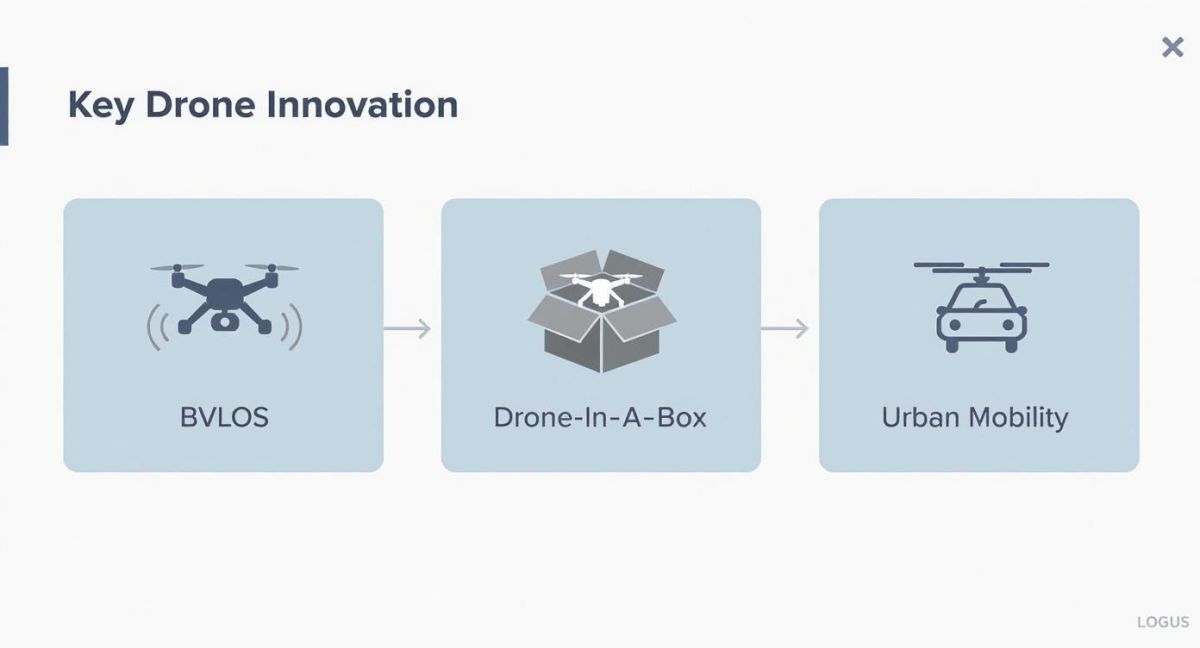
It’s these kinds of advances—from flying beyond visual line of sight (BVLOS) to automated drone stations—that are the real engines behind the industry transformations we're seeing.
It’s Not Just Data, It’s Intelligence
The common thread tying all these uses together is a fundamental shift. We've moved from simply collecting data to generating actionable business intelligence. Drones give us an aerial viewpoint that was once either impossible to get or far too expensive to be practical.
The real change isn't just about putting a camera in the sky. It's about feeding high-quality aerial data into everyday business operations to make smarter, faster, and safer decisions.
Whether it’s getting fertiliser levels just right in a paddock, checking safety compliance on a building site, or keeping our energy infrastructure running smoothly, the applications are direct and powerful.
To get a better sense of how different fields are putting this technology to work, have a look at our guide on the extensive commercial uses for drones. It’s a great way to connect the dots between the tech you’ll see at the expo and how it might apply directly to what you do.
How to Maximise Your Expo Experience
Walking into a major commercial drone expo can be an assault on the senses. With hundreds of exhibitors, a packed schedule of talks, and people everywhere, it's incredibly easy to get overwhelmed. A little preparation beforehand, however, can make all the difference, turning a potentially chaotic visit into an incredibly productive one.
The secret is to show up with a game plan. Before you even think about packing, your goal should be to map out the expo floor and make it work for you. First, ask yourself: what does a successful trip look like?
Are you on the hunt for a specific LiDAR solution for your surveying business? Maybe you’re hoping to find a new software partner. Or perhaps you’re just there to get a feel for where the industry is heading. Nailing down your main objective is the first step and will shape every decision you make once you're there.
Plan Your Attack Before You Arrive
Once you’ve got your goals sorted, it’s time for a bit of homework. The expo website is your best resource. Spend some time digging into the exhibitor list and the floor map, and start building a shortlist of who you absolutely have to see. It's not always about the big, flashy names; some of the best connections happen at the smaller, more specialised booths. A quick look at the top UAV manufacturers can help you figure out your priorities.
Next up, check out the conference schedule. Pinpoint the keynotes, panels, and workshops that speak directly to what you're trying to achieve. If you can, pre-register for these sessions—the popular ones often fill up fast.
Think of your schedule as a roadmap. It keeps you focused on what really matters, preventing you from just wandering the aisles aimlessly. This deliberate approach helps you cut through the noise and connect with the people and tech that can genuinely move the needle for your business.
Network with Purpose
An expo is just as much about who you meet as what you see. But making real connections doesn't just happen by chance. To really get the most out of your time, it pays to check out some proven business networking strategies that can help you turn conversations into solid leads.
Here are a few simple tips that always work:
- Nail your elevator pitch: Get your 30-second intro down pat. Who are you, what do you do, and what are you looking for?
- Ask better questions: Instead of a generic "What does your drone do?", try asking something like, "What's the biggest problem your clients are solving with this?"
- Listen more than you talk: People appreciate genuine interest. The strongest professional relationships are built on understanding, not a sales pitch.
Lastly, figure out a system for keeping track of the people you meet. Whether you use a specific app or just scribble notes on the back of a business card, make sure you jot down the important points from each chat. This will be an absolute goldmine when you're following up after the expo, helping you turn a simple handshake into a lasting connection.
What's Next for Commercial Drones?
When you walk the floor of a commercial drone expo, you're not just looking at the tools of today. You're getting a sneak peek into a future driven by fully autonomous systems that will fundamentally change how our world works.
Picture entire logistics networks where drones handle deliveries from start to finish without a human pilot in sight, all woven into the fabric of a smart city. This isn't science fiction; it's the direction we're heading. This connected ecosystem will depend on drones working hand-in-hand with 5G and the Internet of Things (IoT), allowing for lightning-fast communication and on-the-spot data analysis. Drones are set to become intelligent, mobile sensors in a vast digital network.
A New Economic Horizon
The economic shift this will bring is hard to overstate. Here in Australia, the drone industry is expected to boom, with forecasts predicting a market value of AUD 14.5 billion by 2040. On top of that, this growth is tipped to create around 5,500 full-time jobs each year, cementing our position on the global stage. If you're curious, you can read more about Australia's drone industry growth and its economic impact.
This future really boils down to a few major leaps forward:
- Autonomous Swarms: Imagine entire fleets of drones coordinating to tackle huge jobs, like monitoring vast farmlands or responding to natural disasters together.
- AI-Powered Decisions: We're talking about drones that can think for themselves, analysing a situation and making the right call in real-time without needing a human to intervene.
- Seamless Air Traffic Control: For this to work, we need sophisticated Uncrewed Traffic Management (UTM) systems—essentially an air traffic control network for thousands of autonomous aircraft flying at once.
The future isn't about one drone replacing one person. It's about creating entirely new automated systems that unlock efficiencies and solve problems in ways we're only just beginning to grasp.
This is why staying connected through events like the Commercial Drone Expo is so important. You get face-to-face with the people building this future, giving you a real, practical sense of how autonomous systems are about to redefine everything from package delivery to public safety.
Got Questions About Drone Expos? We've Got Answers
Walking into your first commercial drone expo can feel a bit like stepping into the future. It's buzzing, it's packed, and it can be a little overwhelming. But with a bit of prep, you can turn that feeling into a massive opportunity. This is where you get to shake hands with the people actually building and flying the tech that's changing our world.
You'll see a real cross-section of industries under one roof. One minute you could be talking to a farmer who needs a better way to monitor crop health, and the next you're chatting with a public safety officer looking for a reliable search-and-rescue drone. It’s a genuine melting pot of pilots, engineers, software gurus, and even the policymakers writing the rules.
Is a Drone Expo Right for Me?
If your job touches on anything to do with aerial data, automation, or remote inspections, then yes, absolutely. These events are built for professionals who are serious about using drones to get work done safer, faster, and with better information.
Think of it this way. You should be there if you are:
- An Industry Pro: Working in fields like construction, agriculture, energy, mining, or public safety.
- A Tech Head: You might be a drone pilot, a service provider, or the engineer or developer behind the hardware and software.
- A Business Leader: Perhaps you're an investor scouting the next big thing or a manager tasked with rolling out a drone program across your company.
- A Policymaker or Researcher: The people from government and academia who are shaping the regulations and future of the industry.
How to Tackle Your First Expo Like a Pro
The secret to a great expo experience? Don't just show up and drift. A little homework goes a long way. Before you even pack your bags, jump on the event website. Check out the exhibitor list and the floor plan to map out your "can't-miss" booths and speaker sessions.
Even more crucial is to set a clear goal. Why are you really going? Are you on the hunt for a specific new sensor? Trying to find the right software partner? Or is your main goal to just connect with other people in the industry? Knowing your objective will keep you focused on the demos and conversations that will actually benefit your work.
So many first-timers think it's just about the drones themselves. But you’ll quickly realise that the hardware is only one piece of the story. The show floor is packed with everything that makes a drone useful—flight planning software, data analytics platforms, AI-powered tools, and pilot training schools.
That's the real magic of a commercial drone expo. It’s the one place you can see the entire ecosystem in action, from the drone in the air to the tangible data it delivers back on the ground.
Ready to integrate advanced drone technology into your operations? Innoflight International designs and manufactures high-performance unmanned aerial systems for Australia's most demanding industries. From heavy-lift platforms to precision sensors, we provide complete solutions to elevate your capabilities. Explore our offerings.